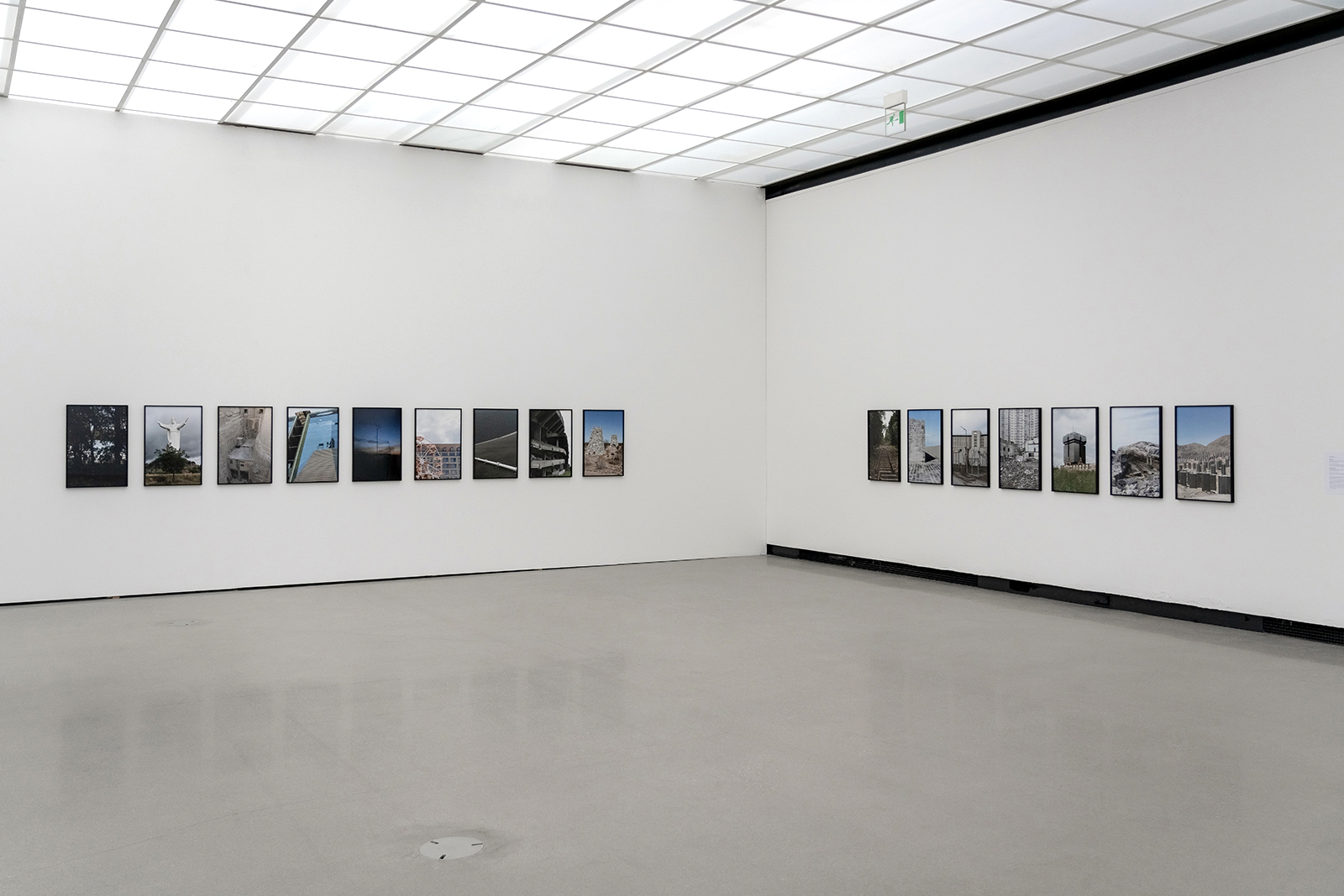
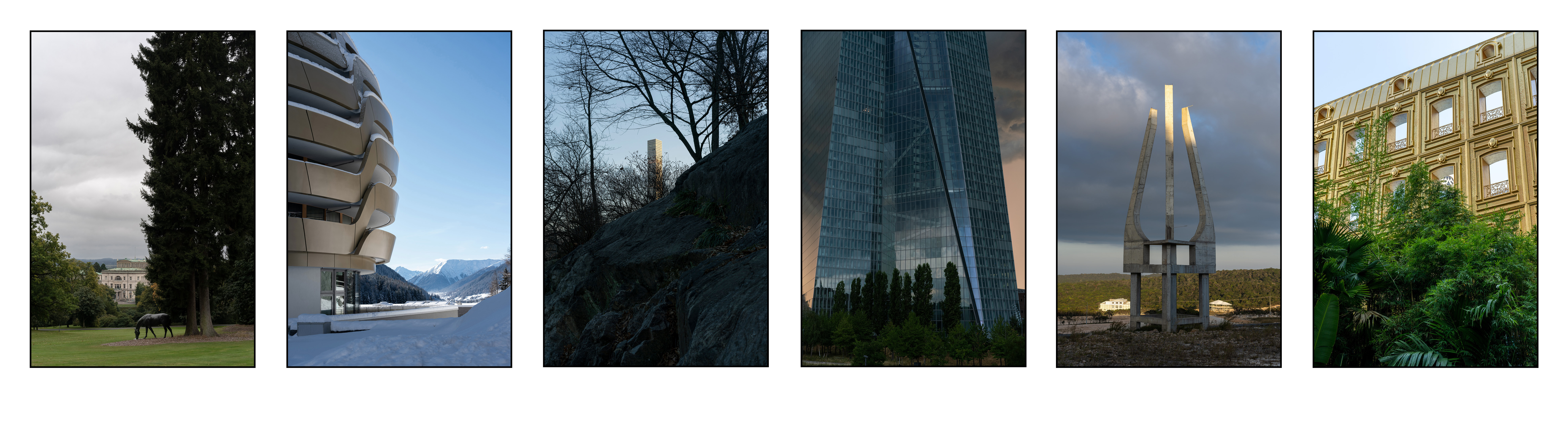
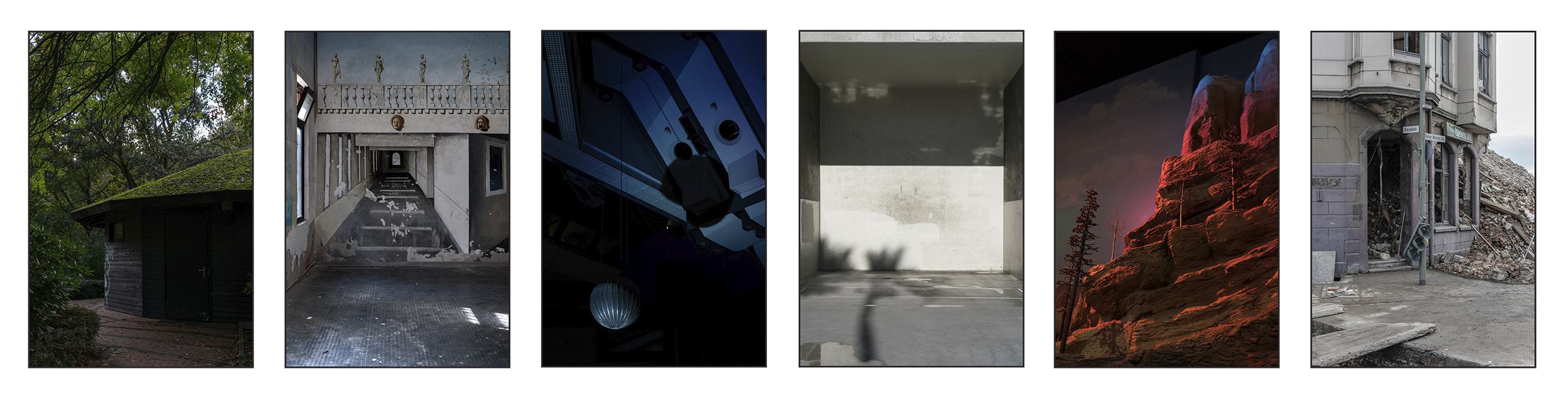
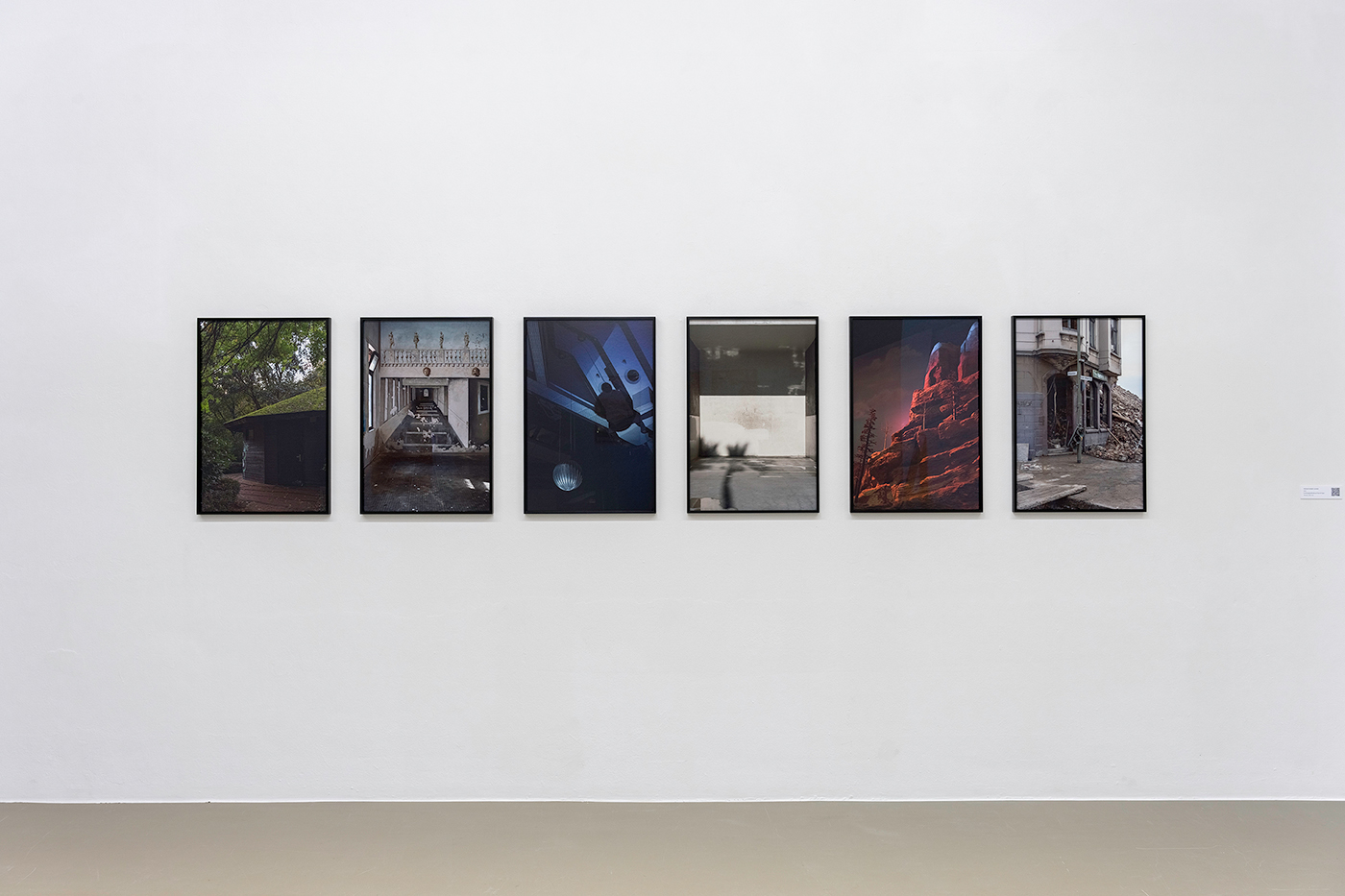


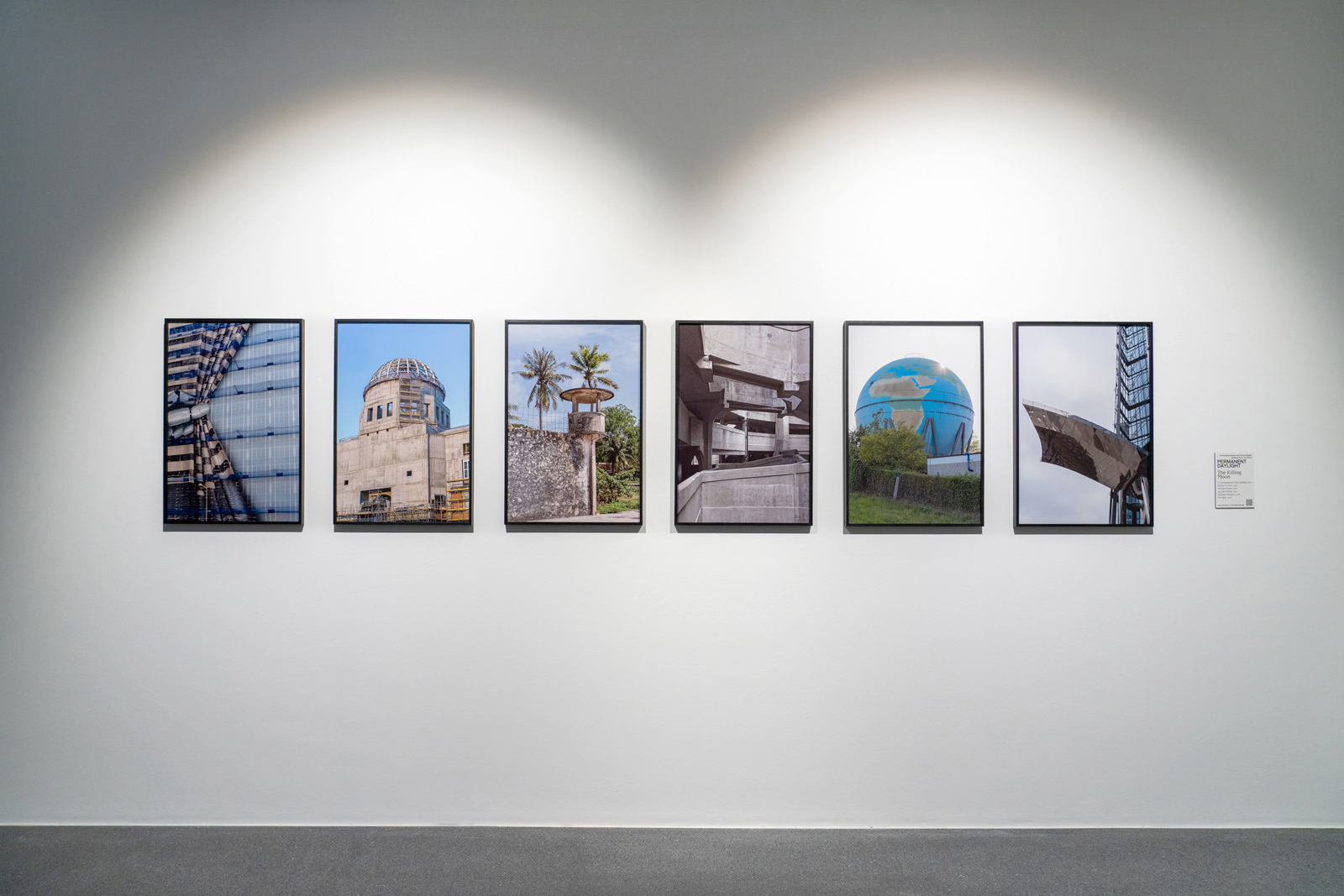
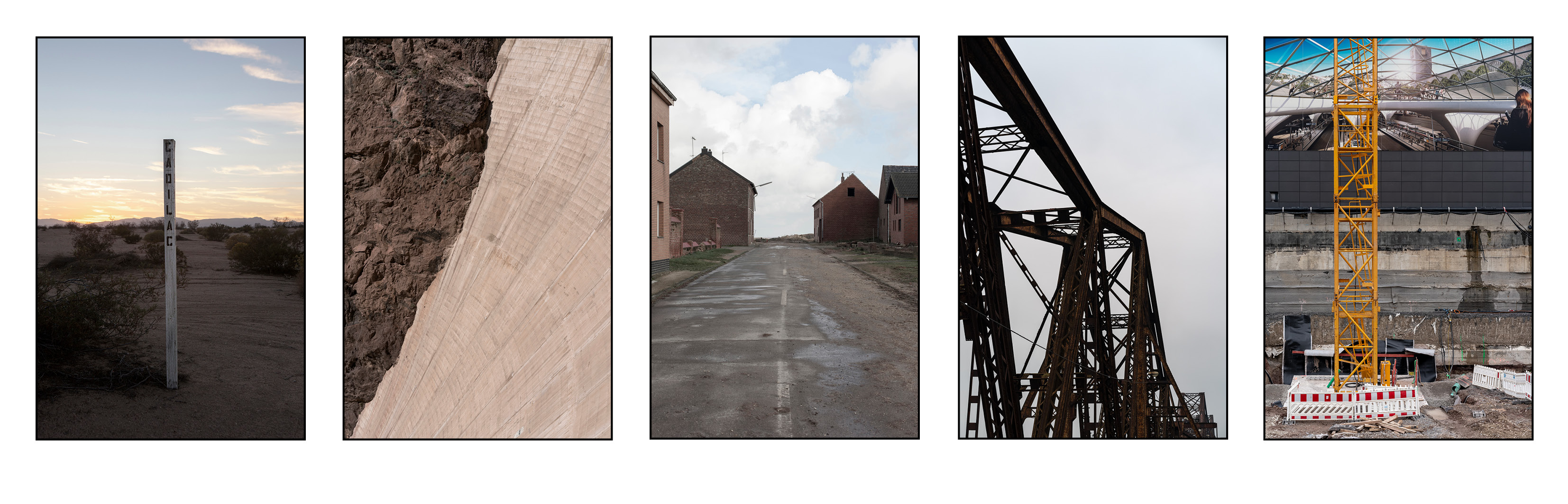
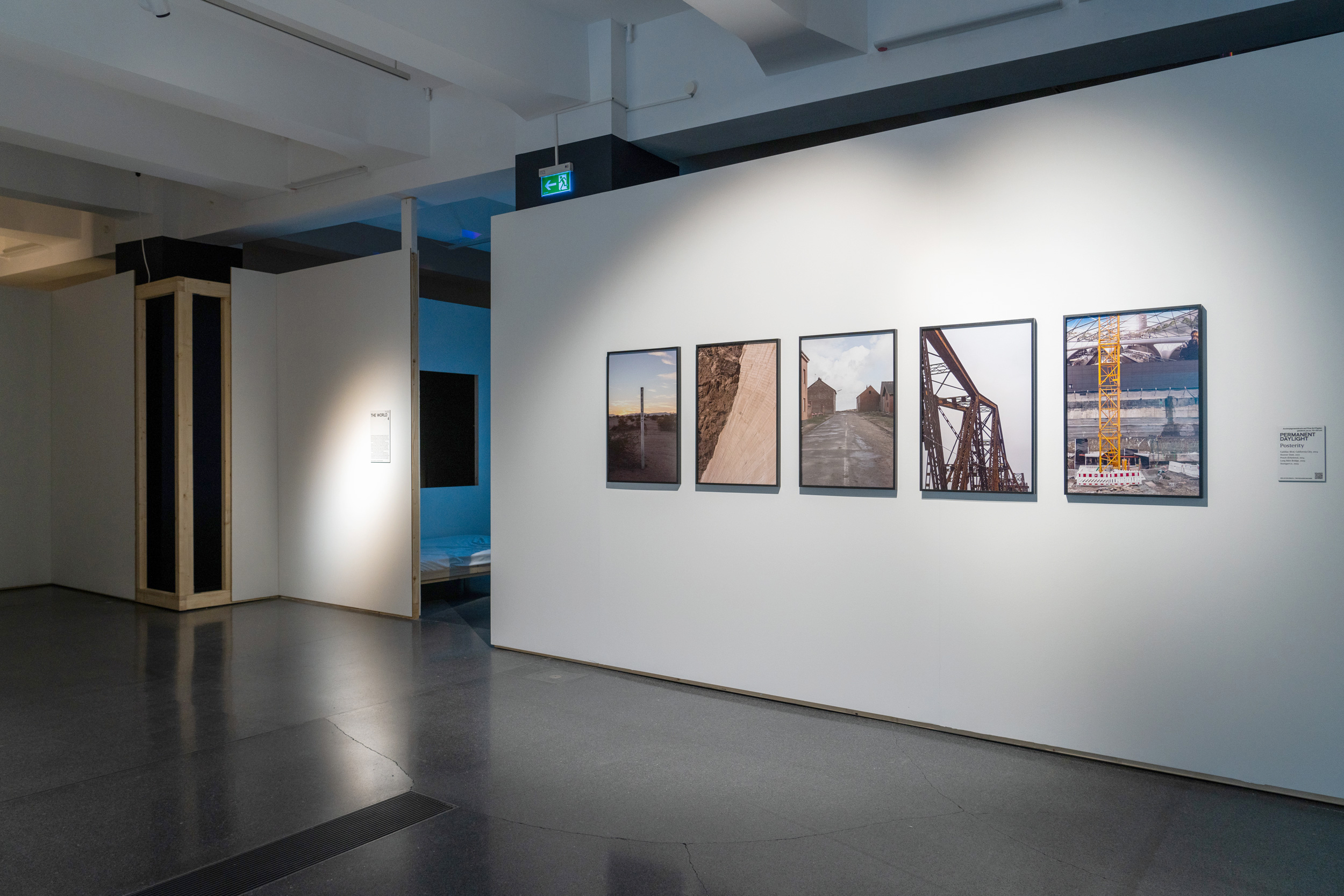
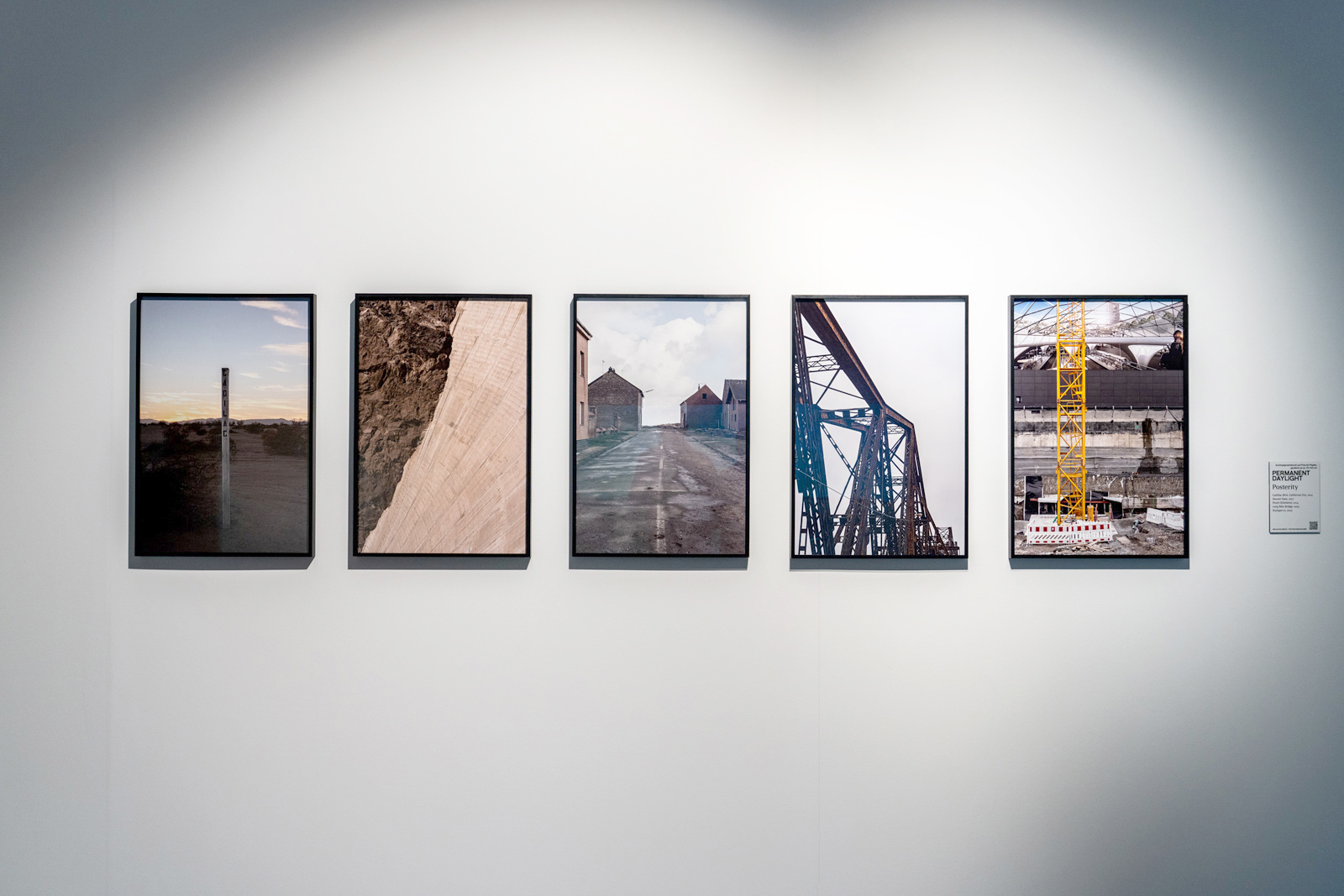
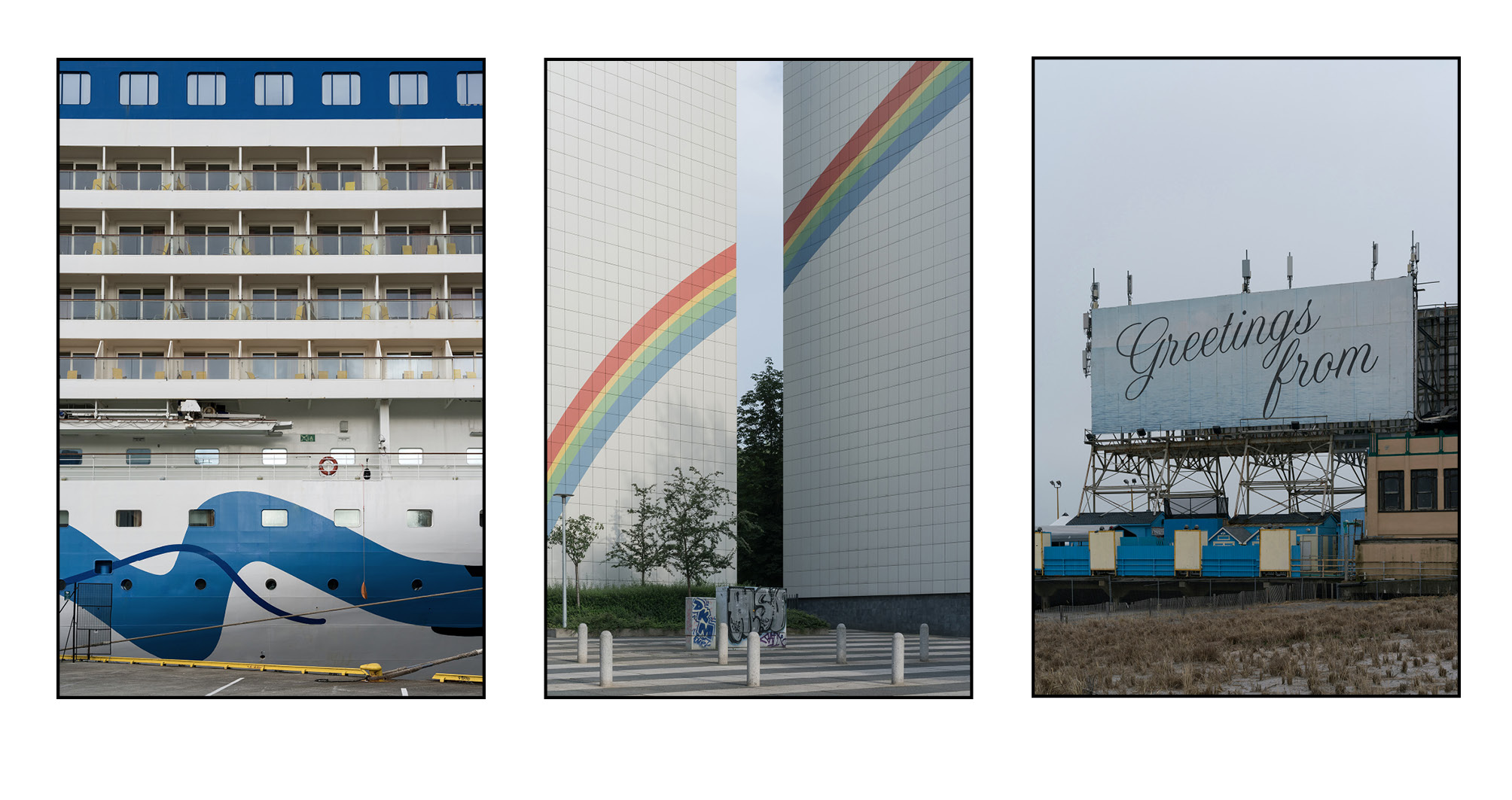
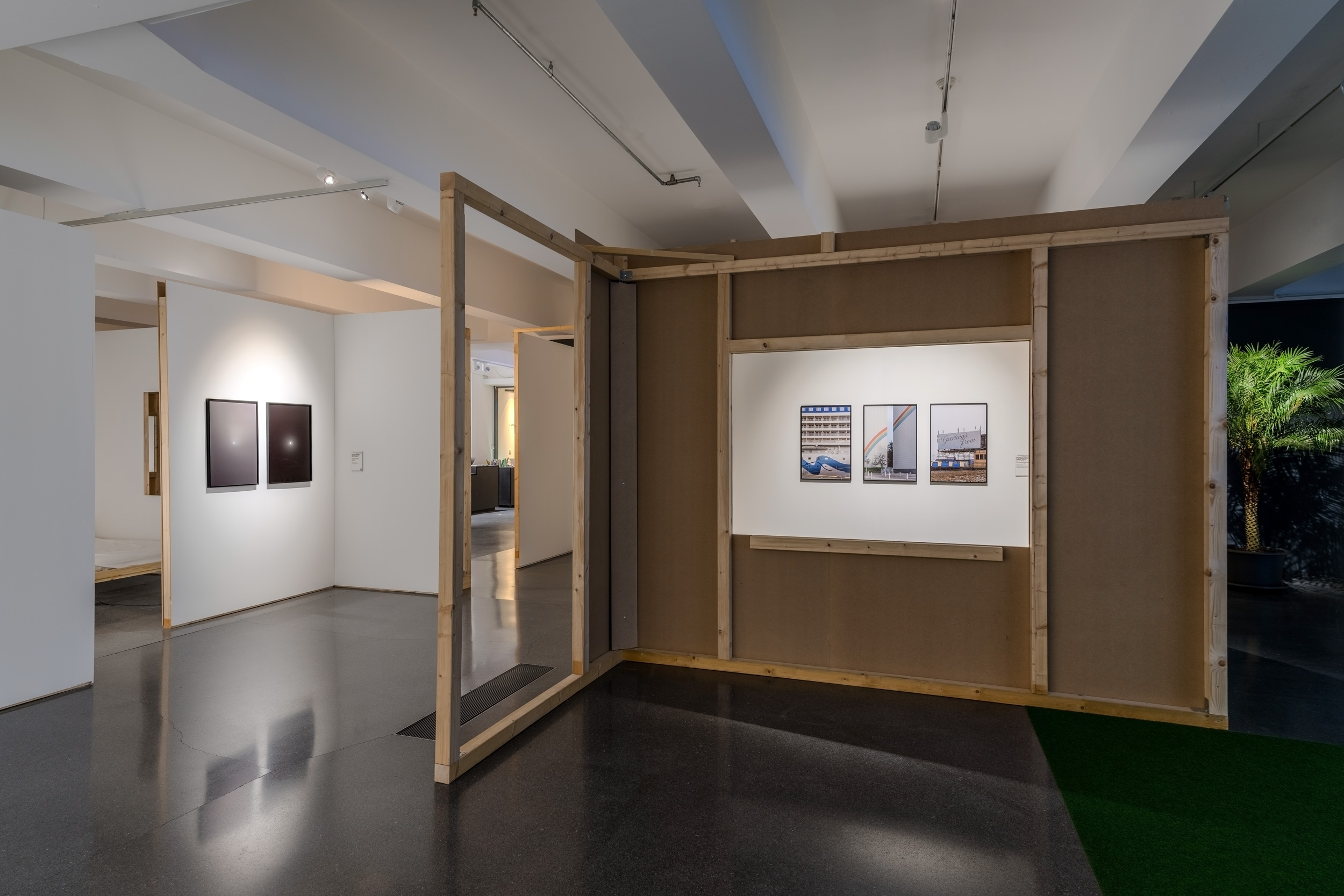
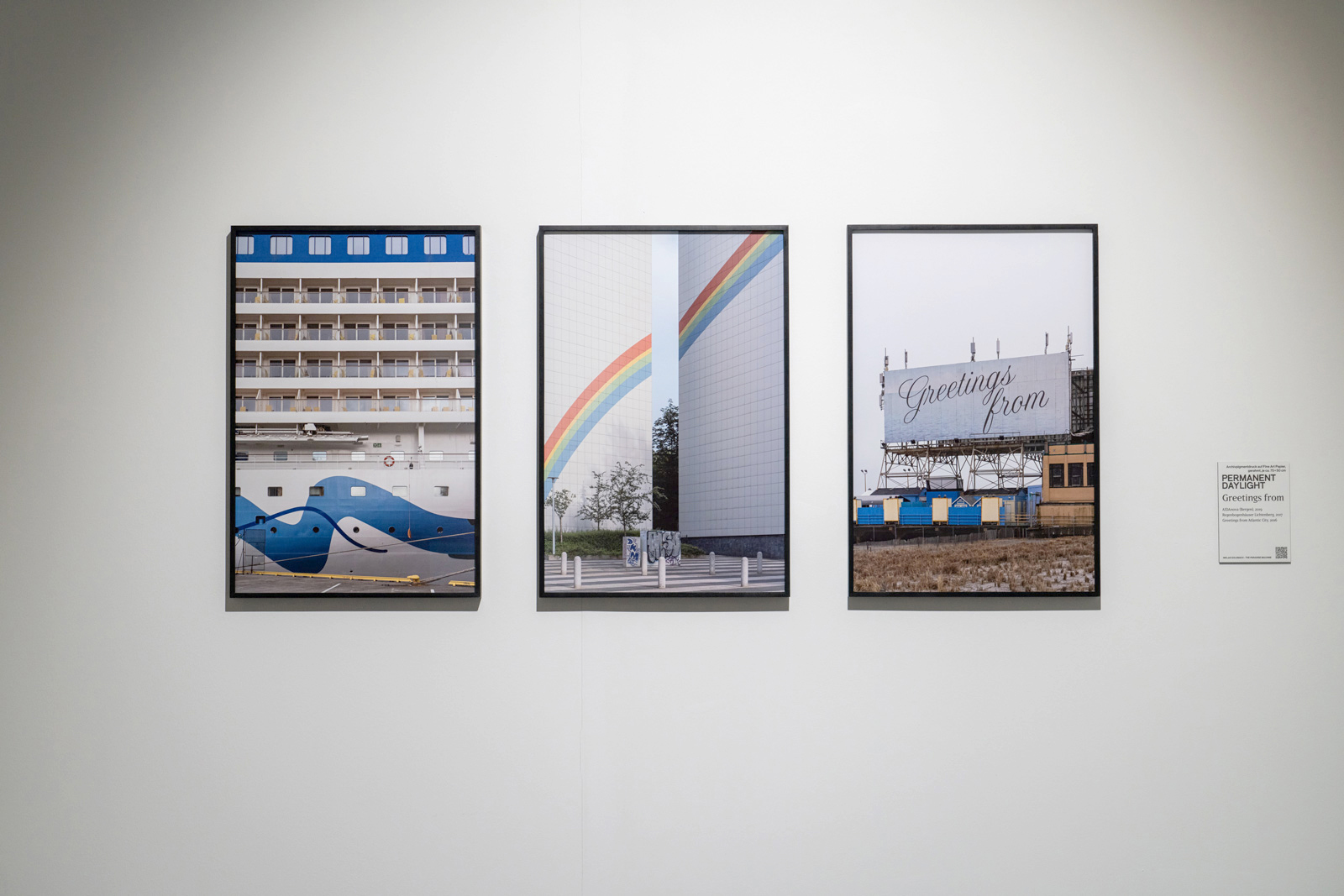
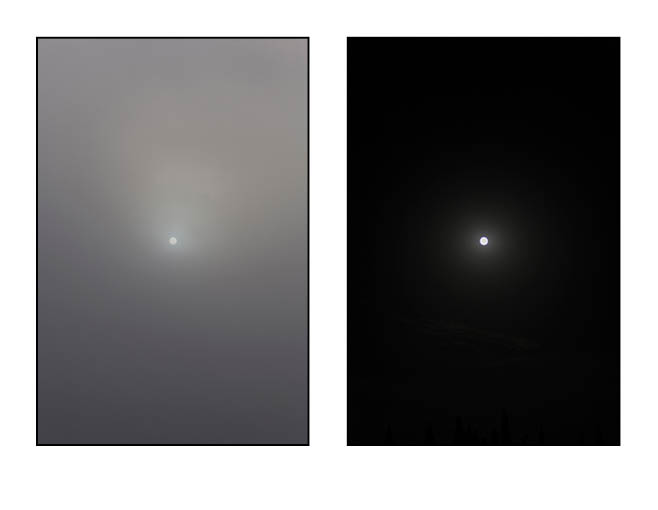


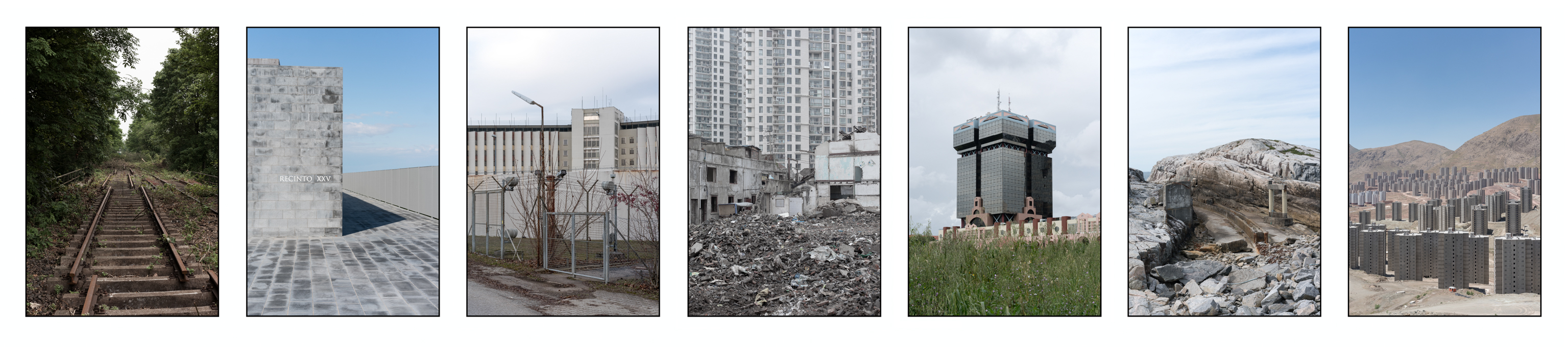
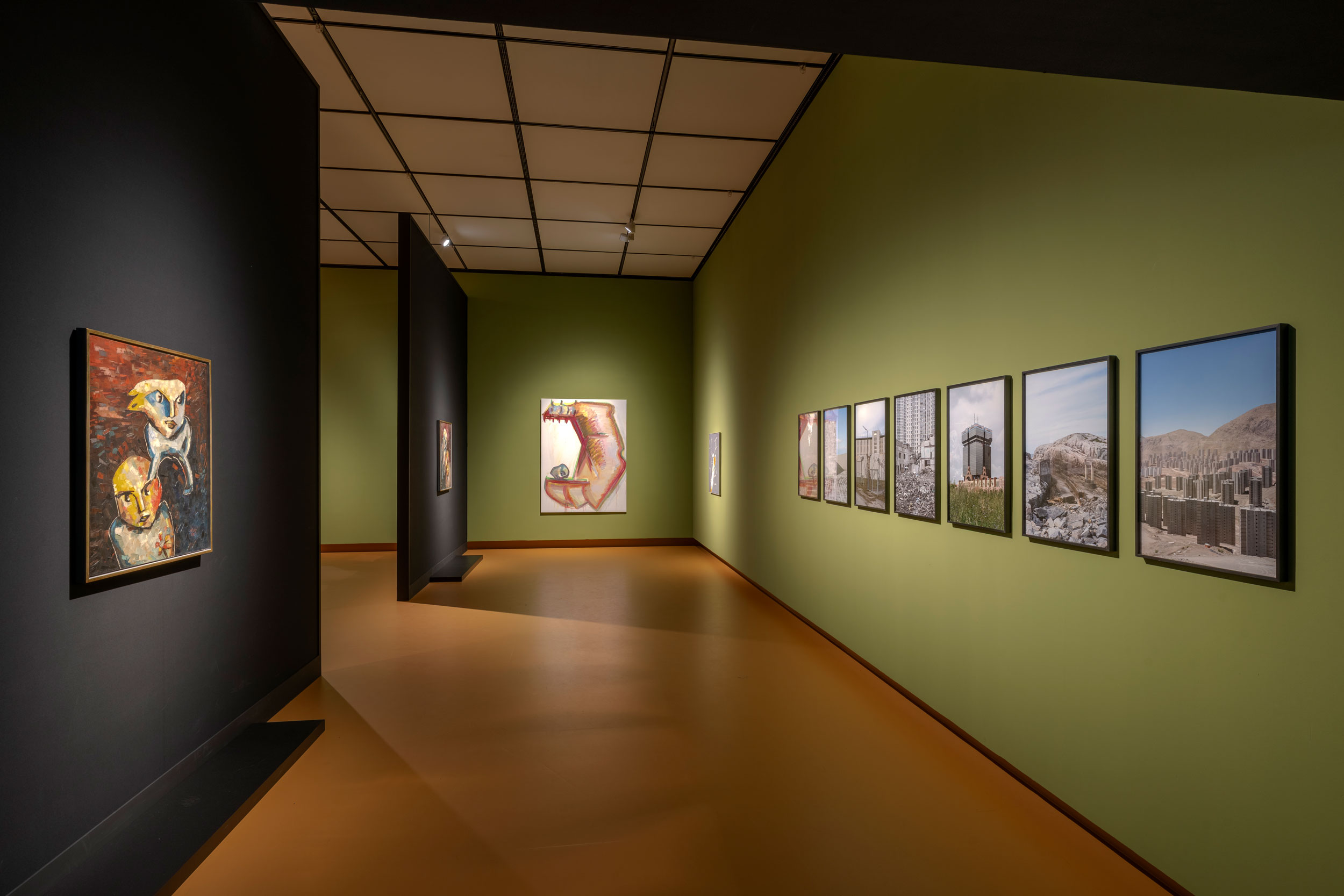
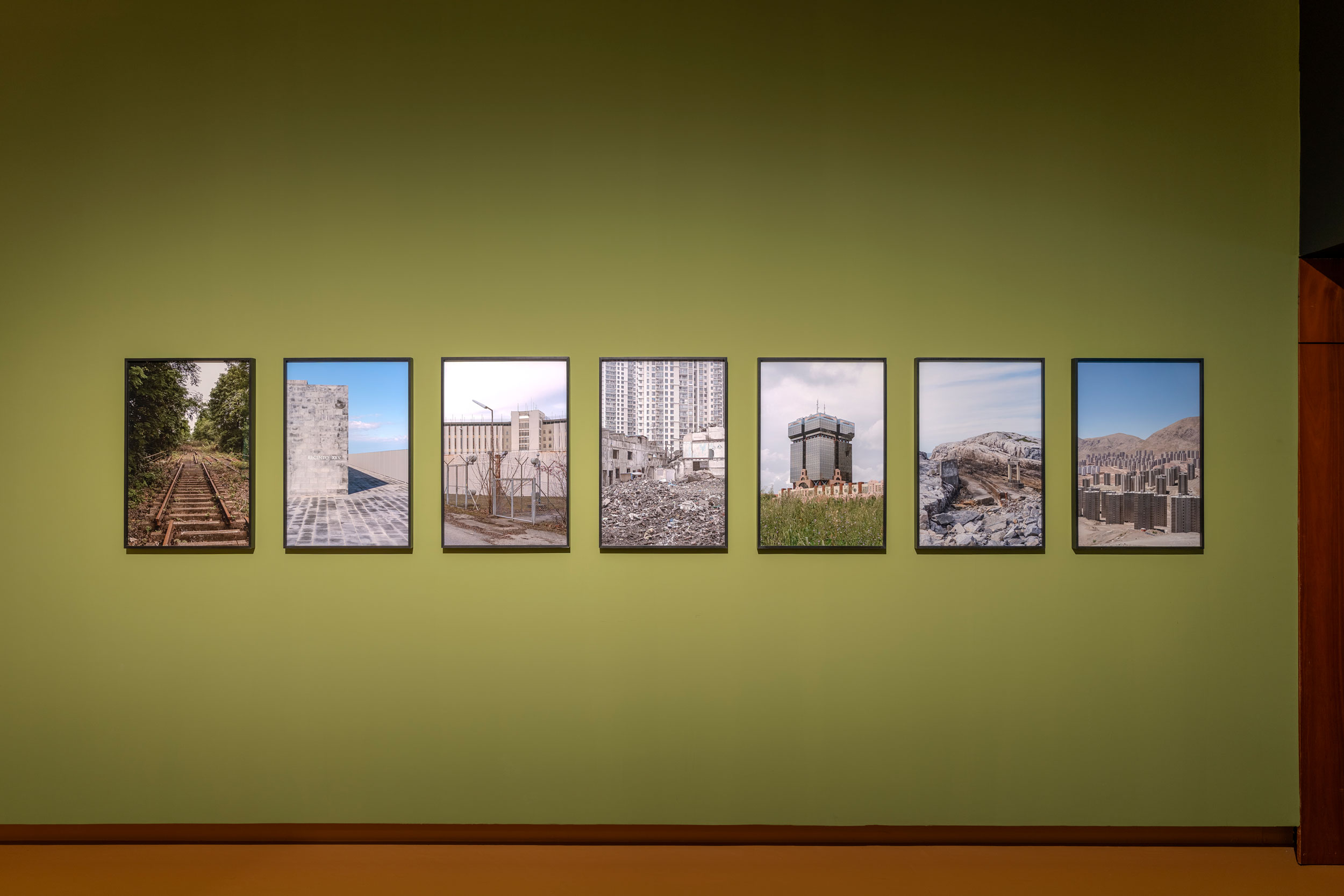
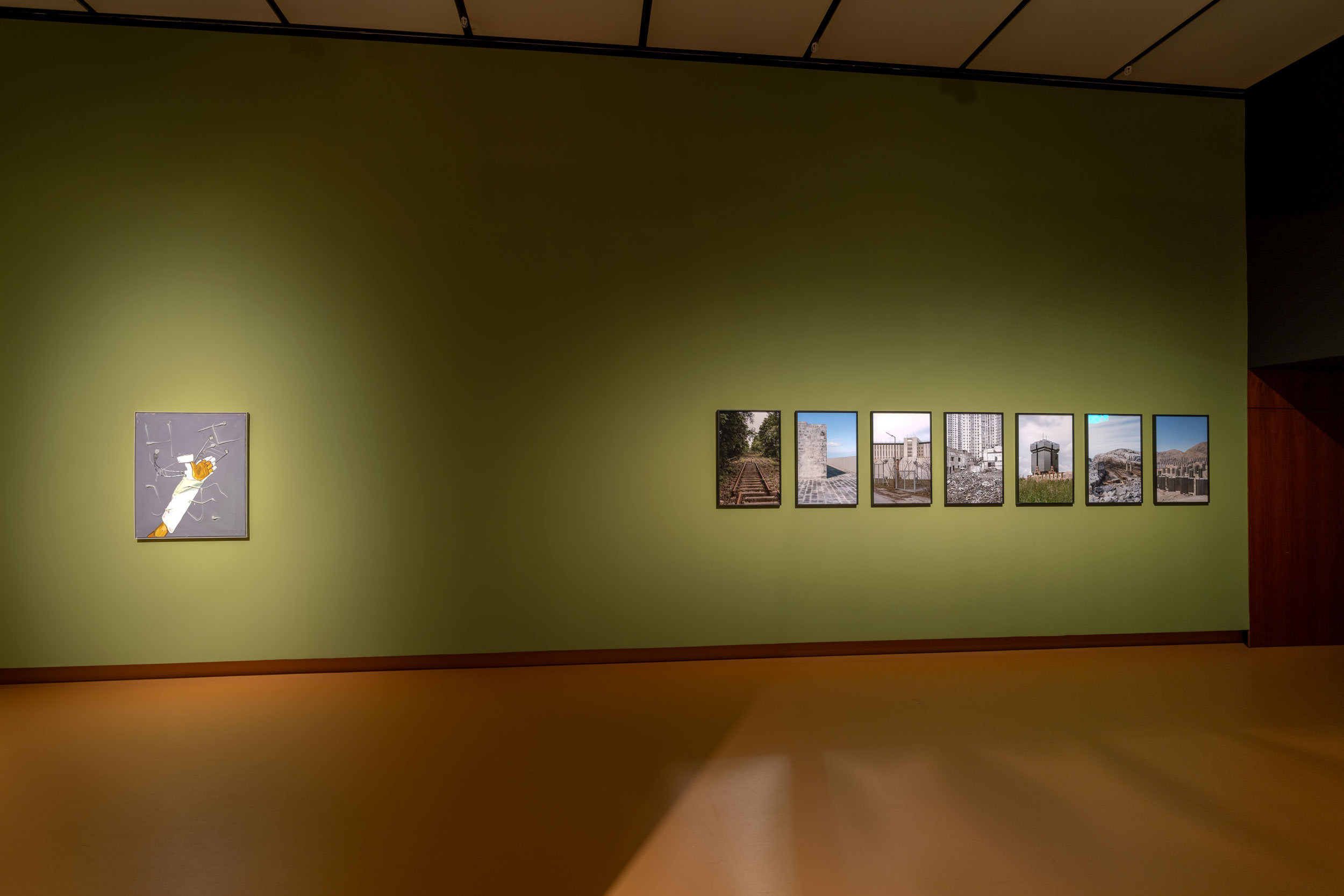
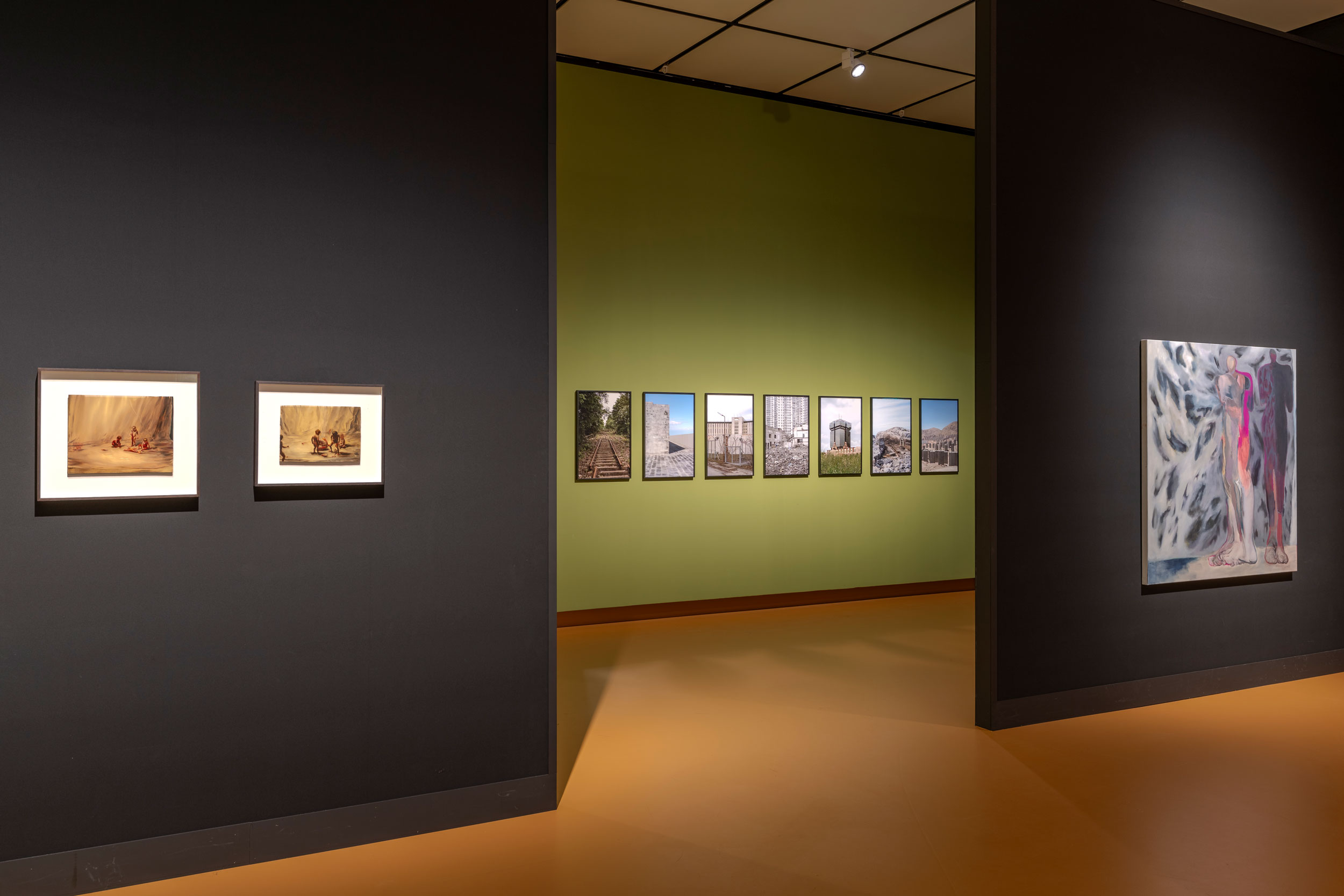
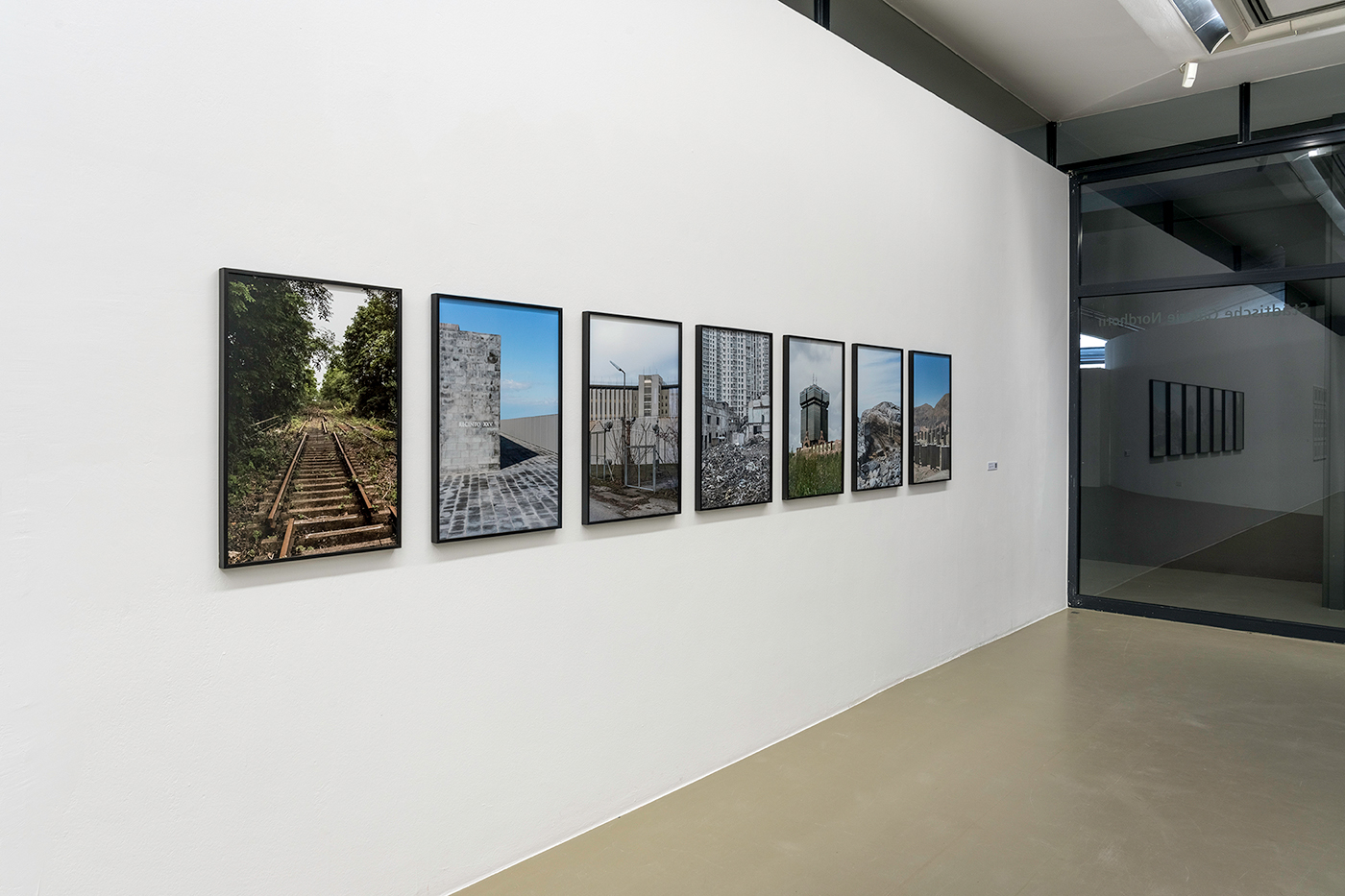
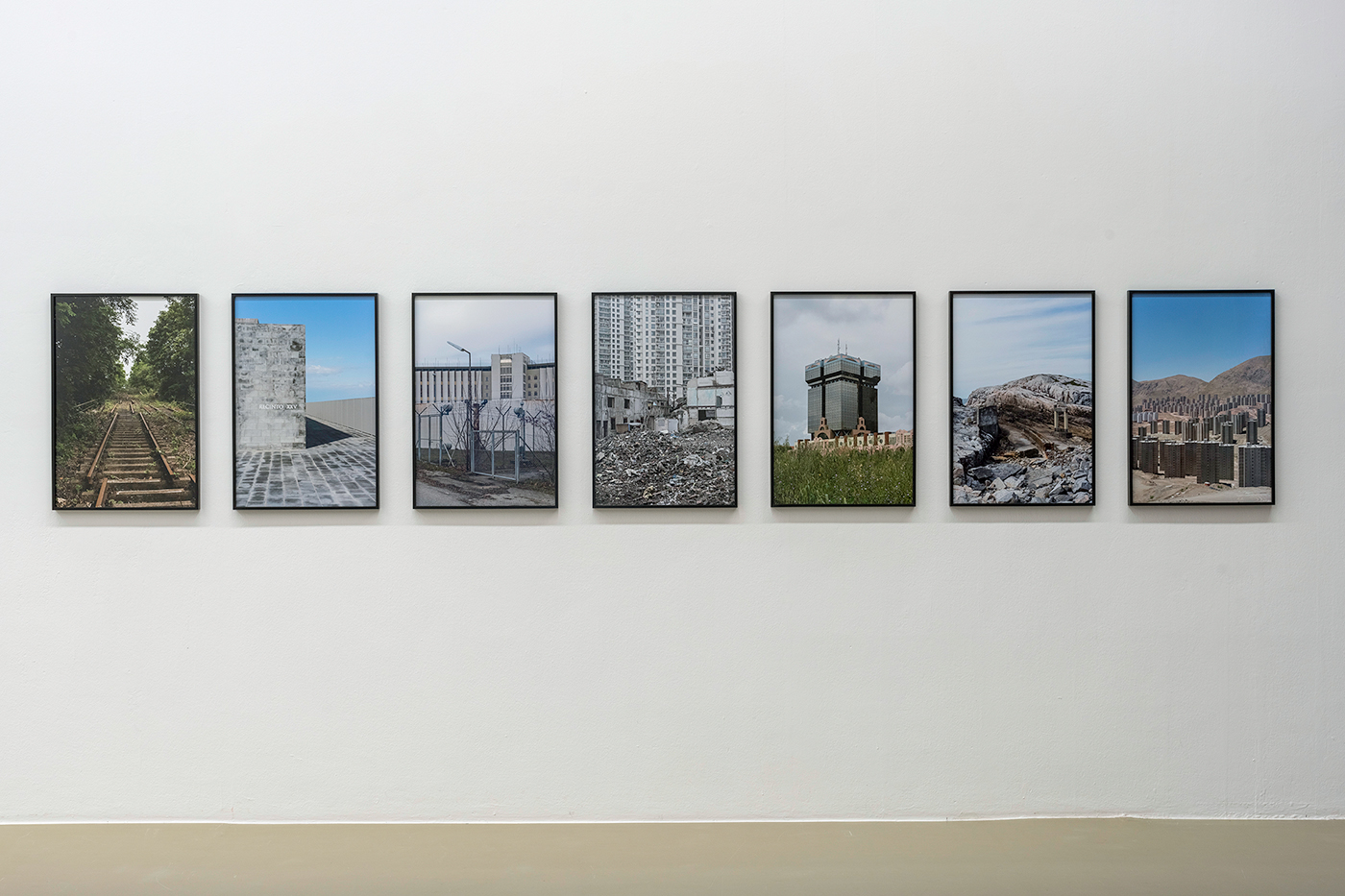
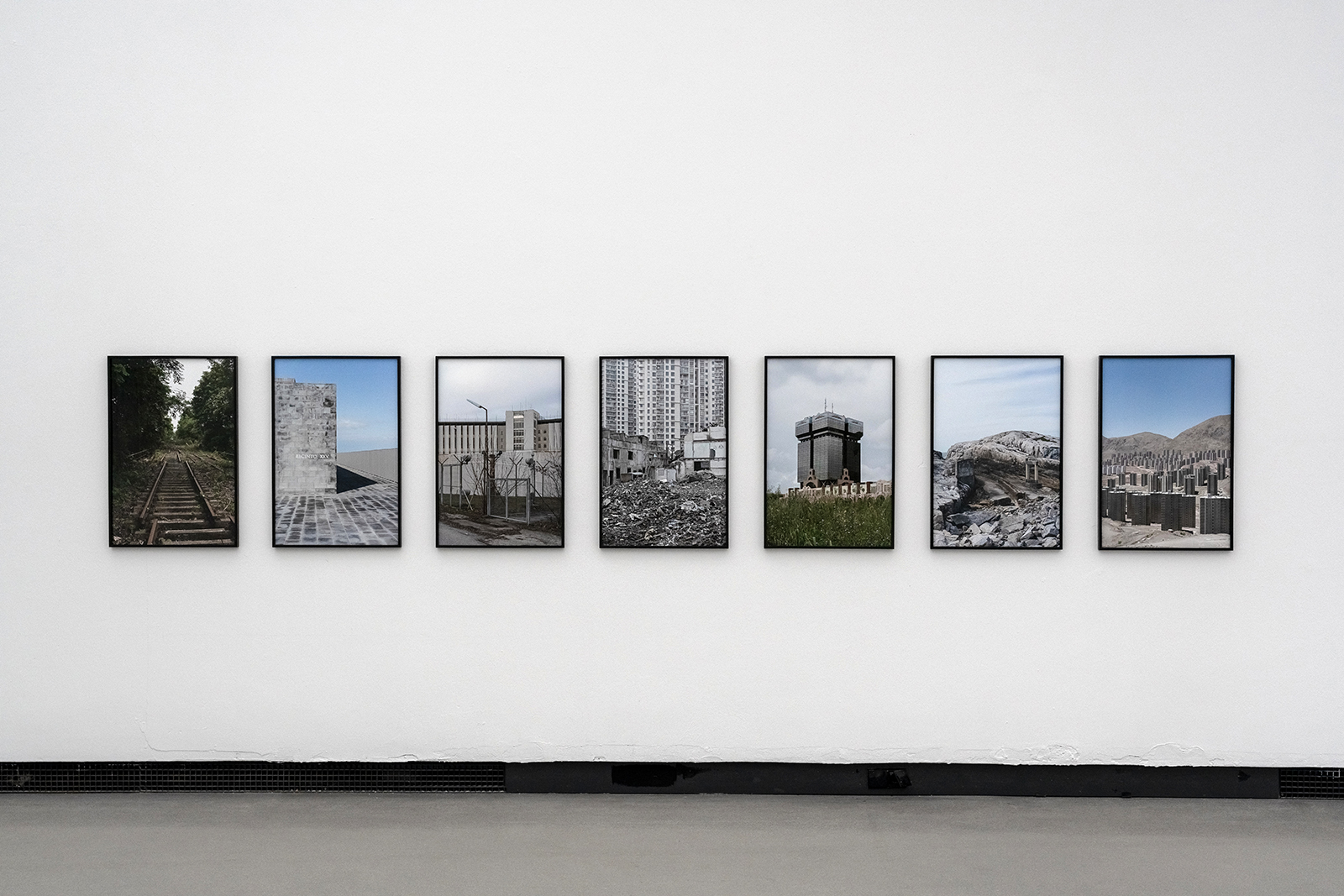
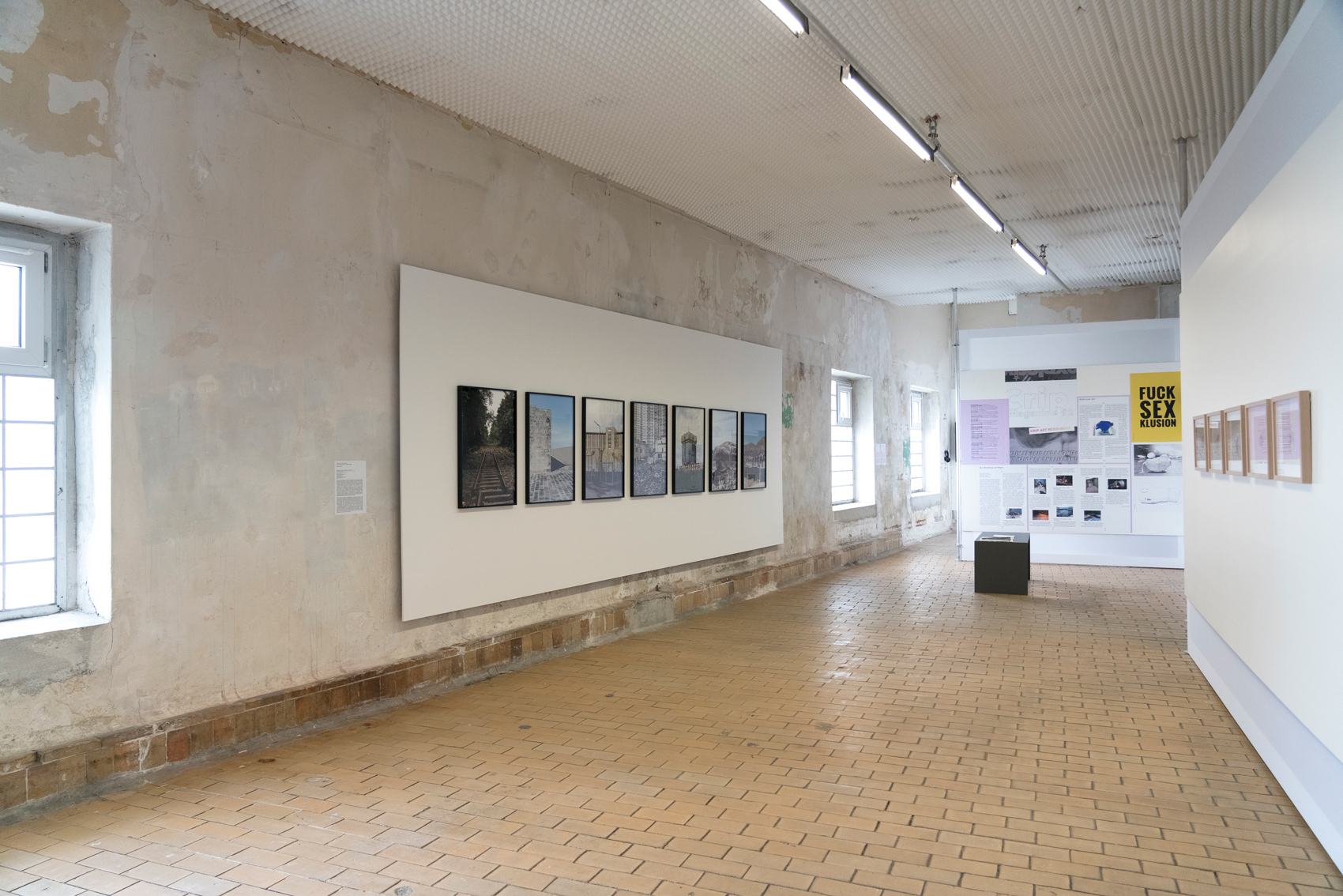
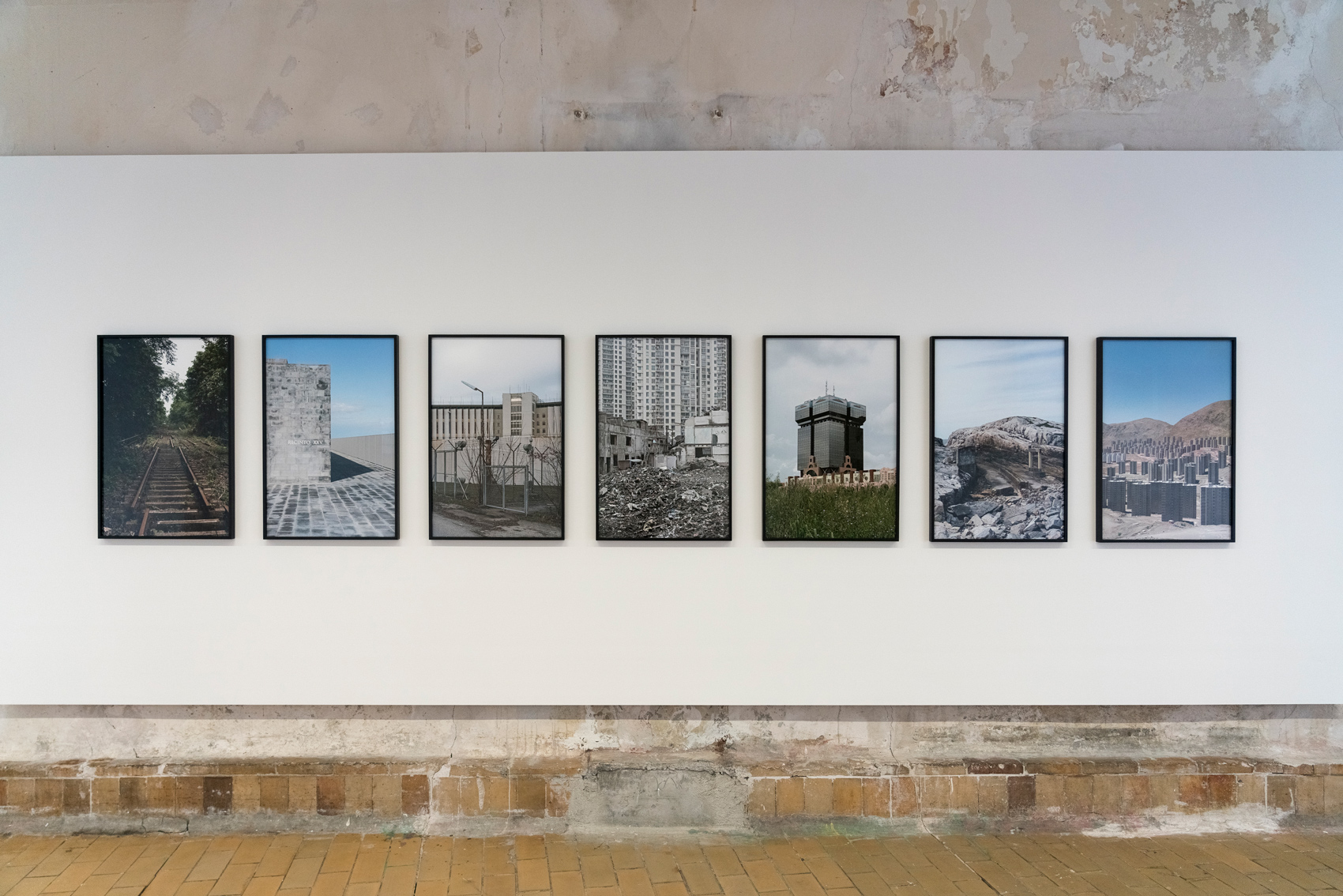

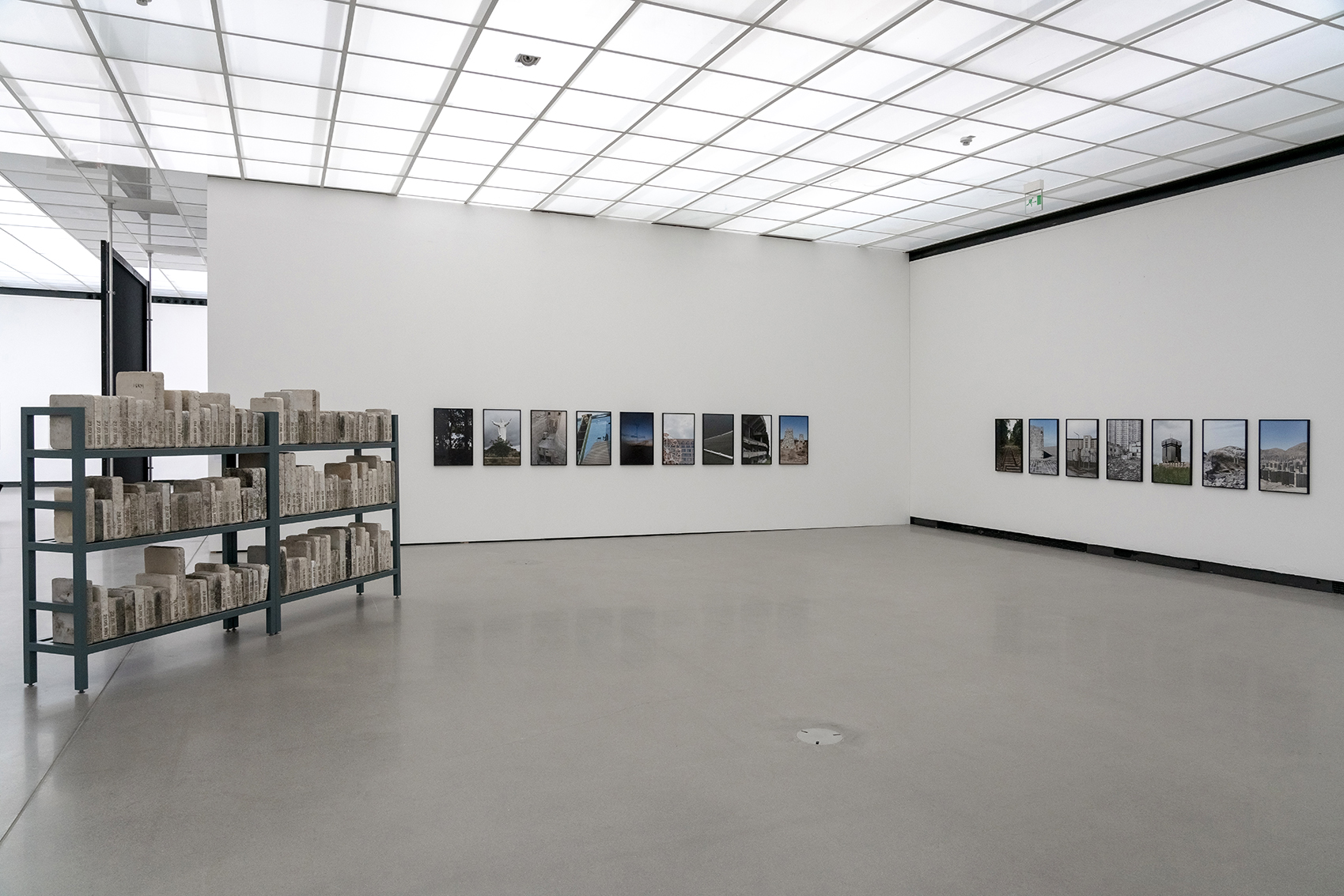
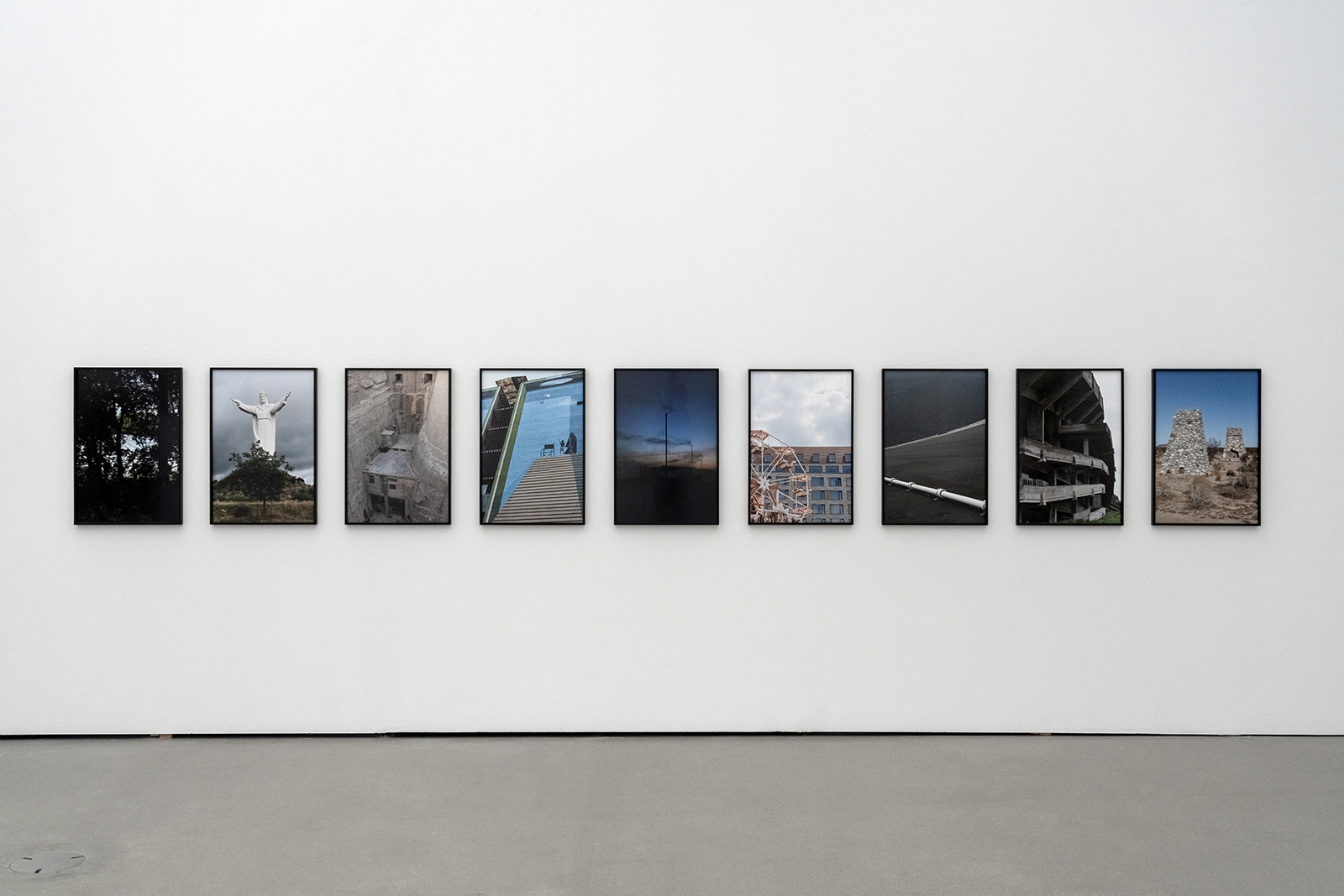
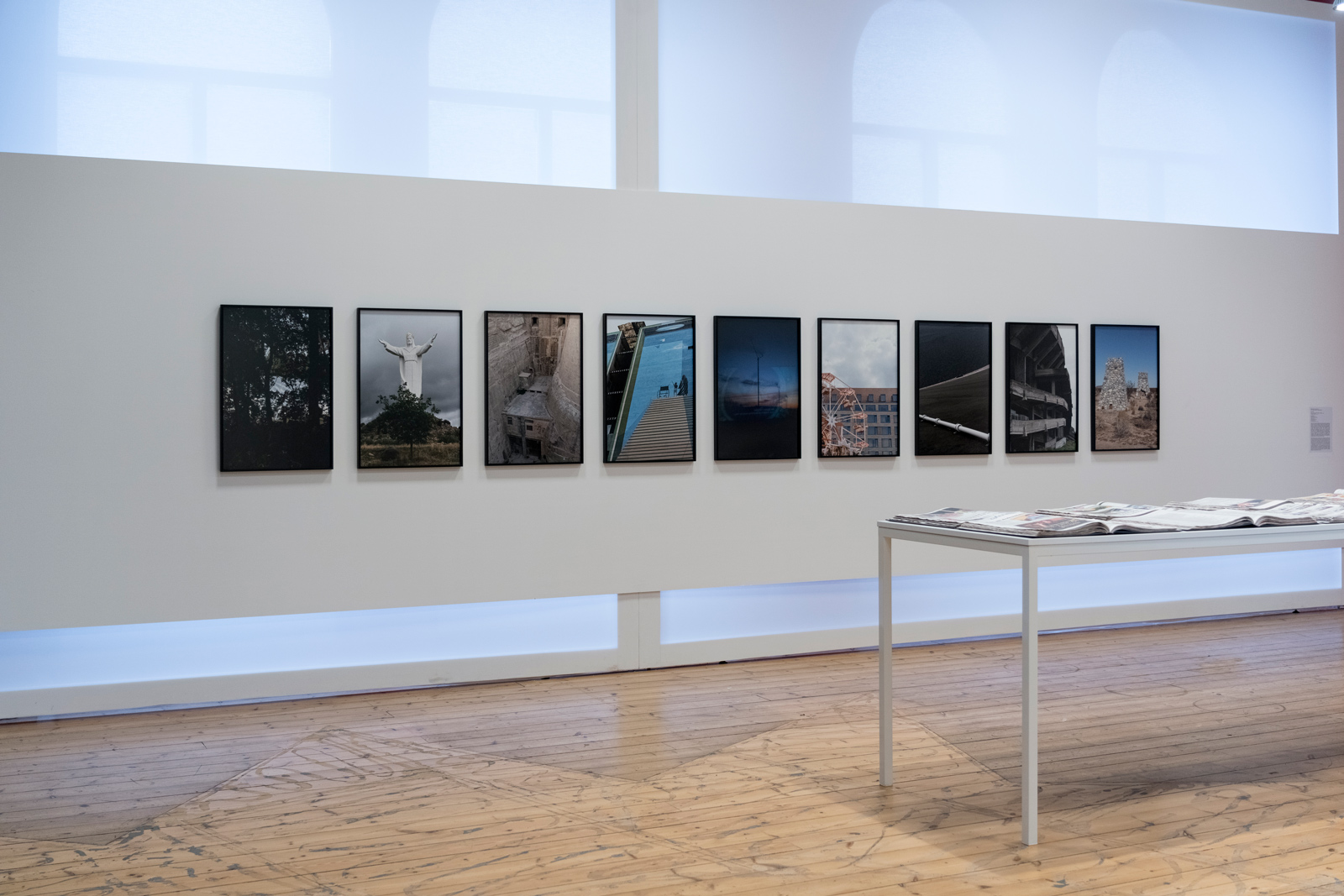
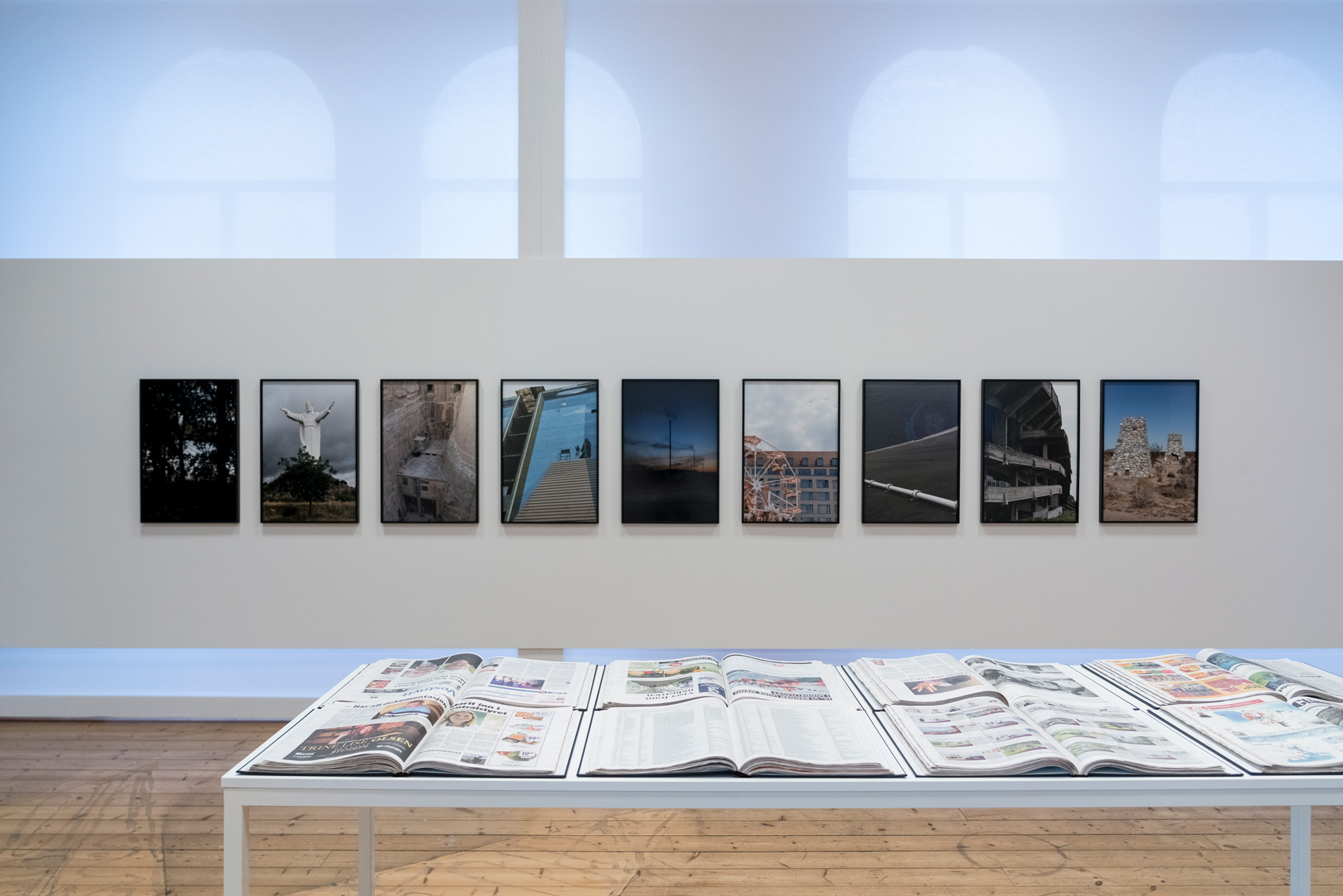

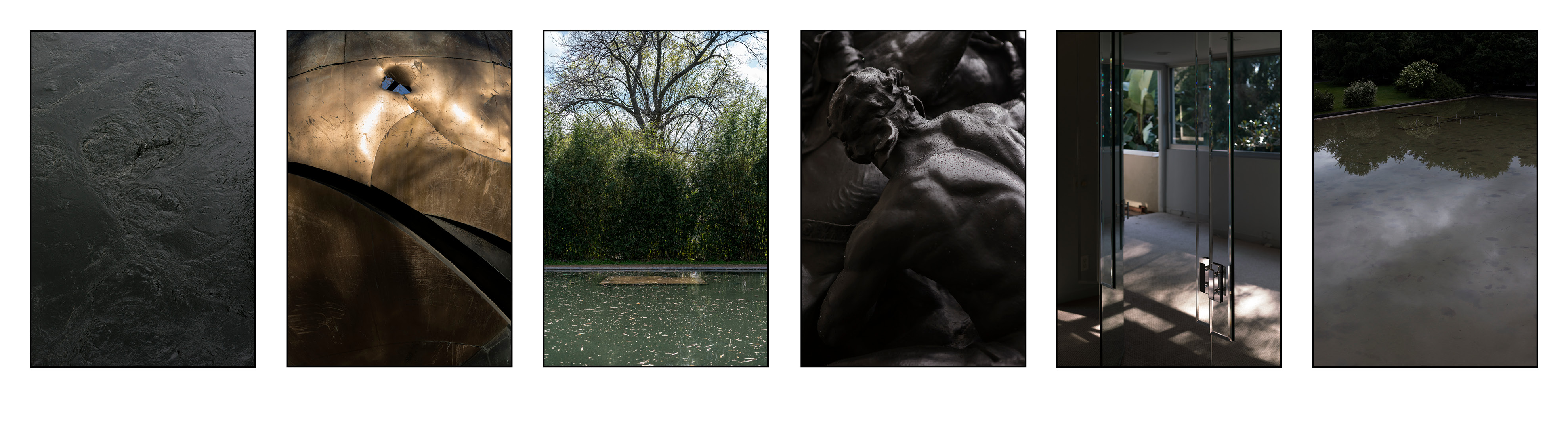

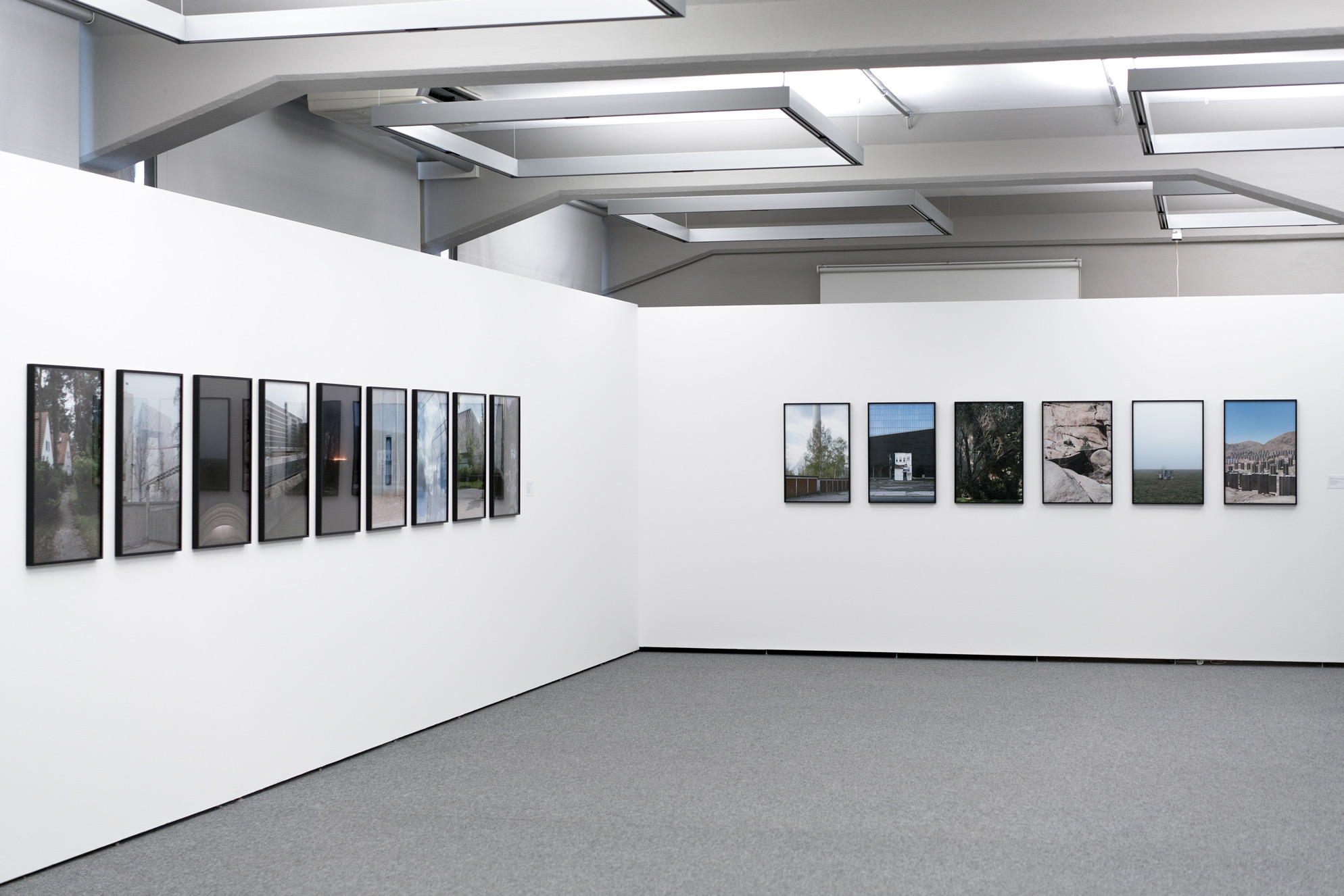
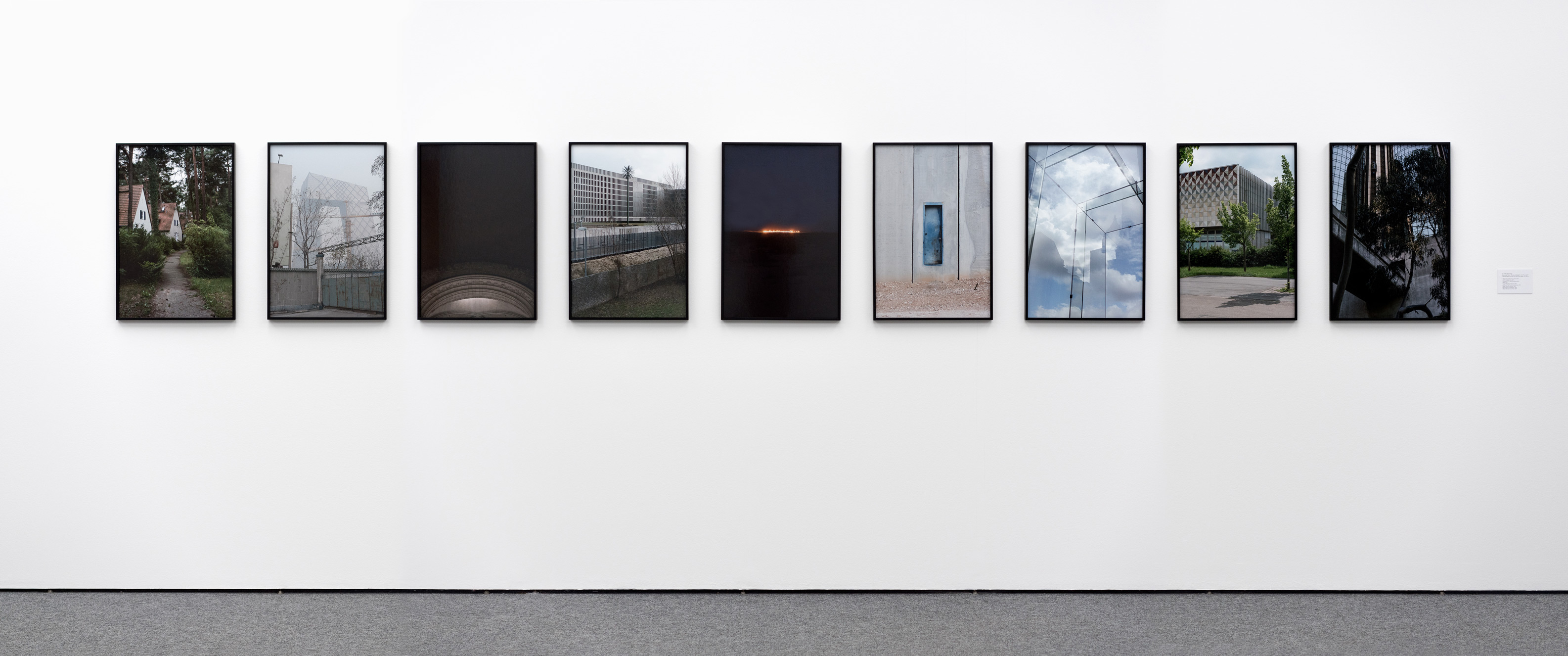
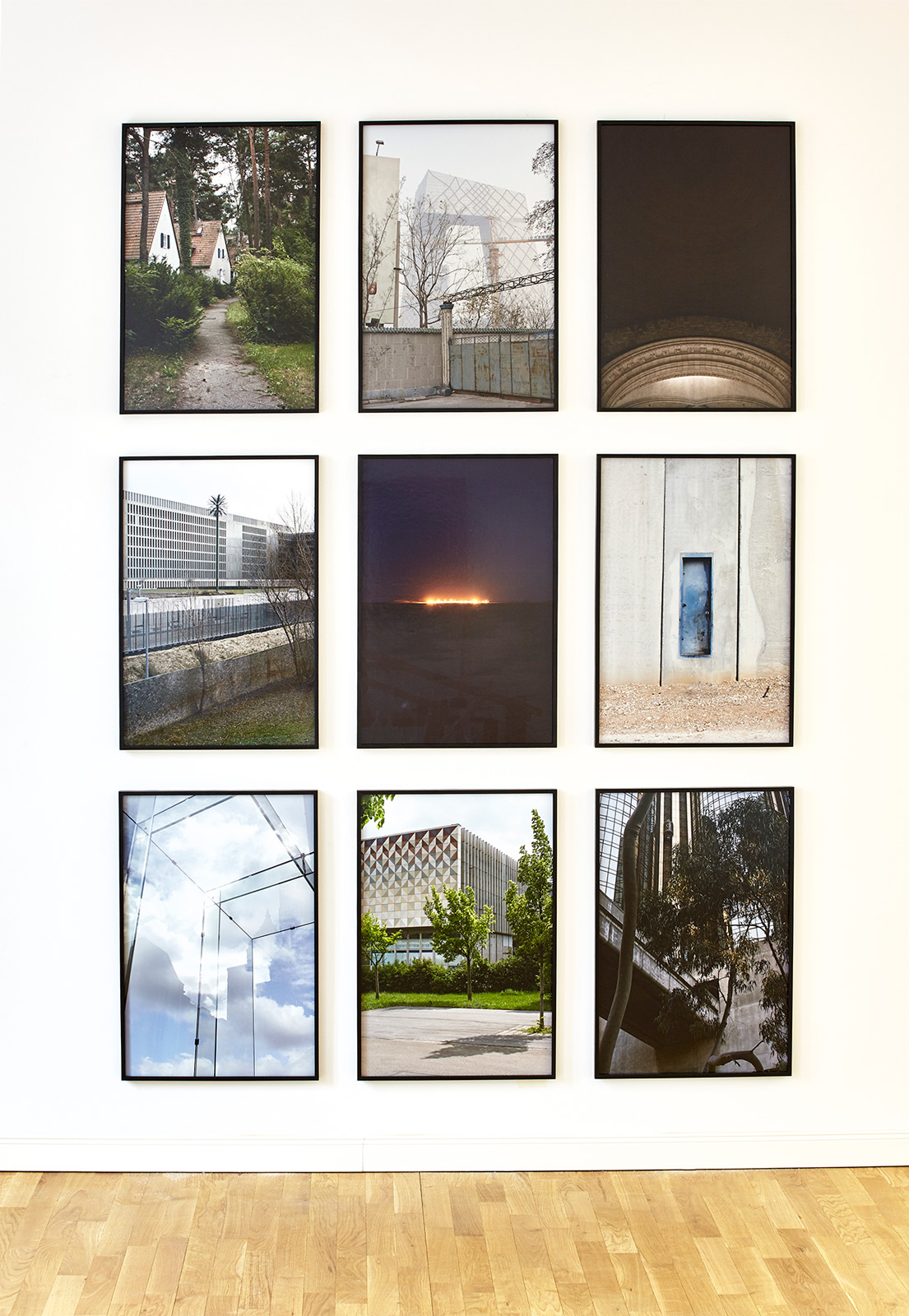
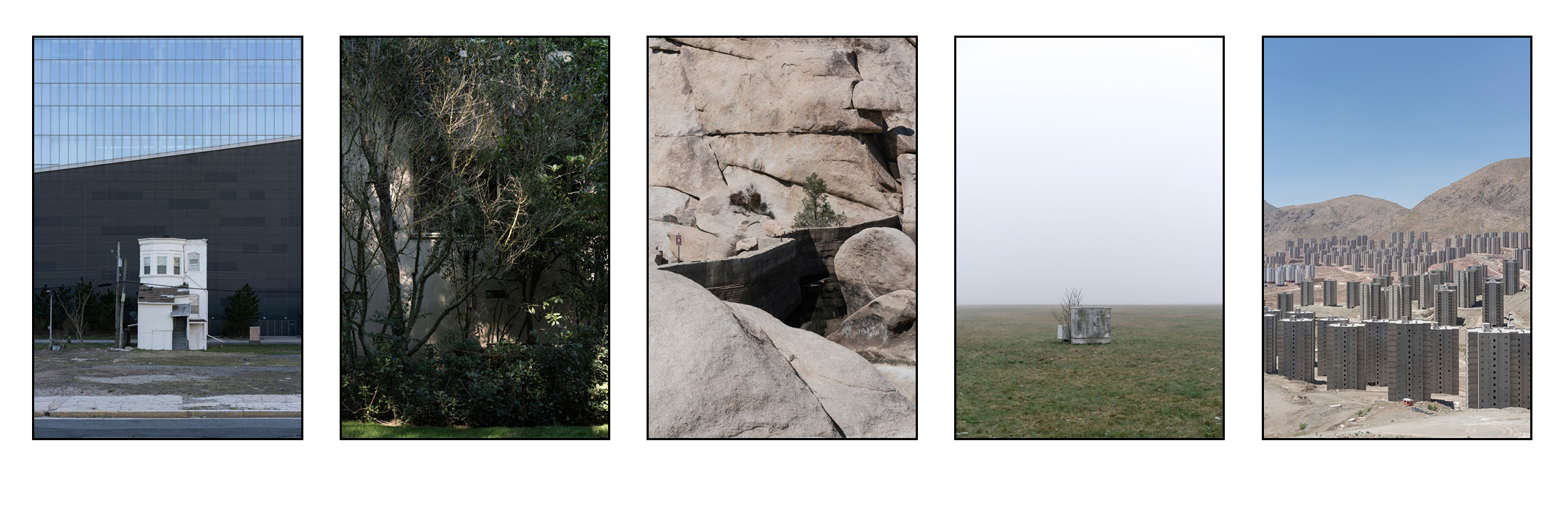
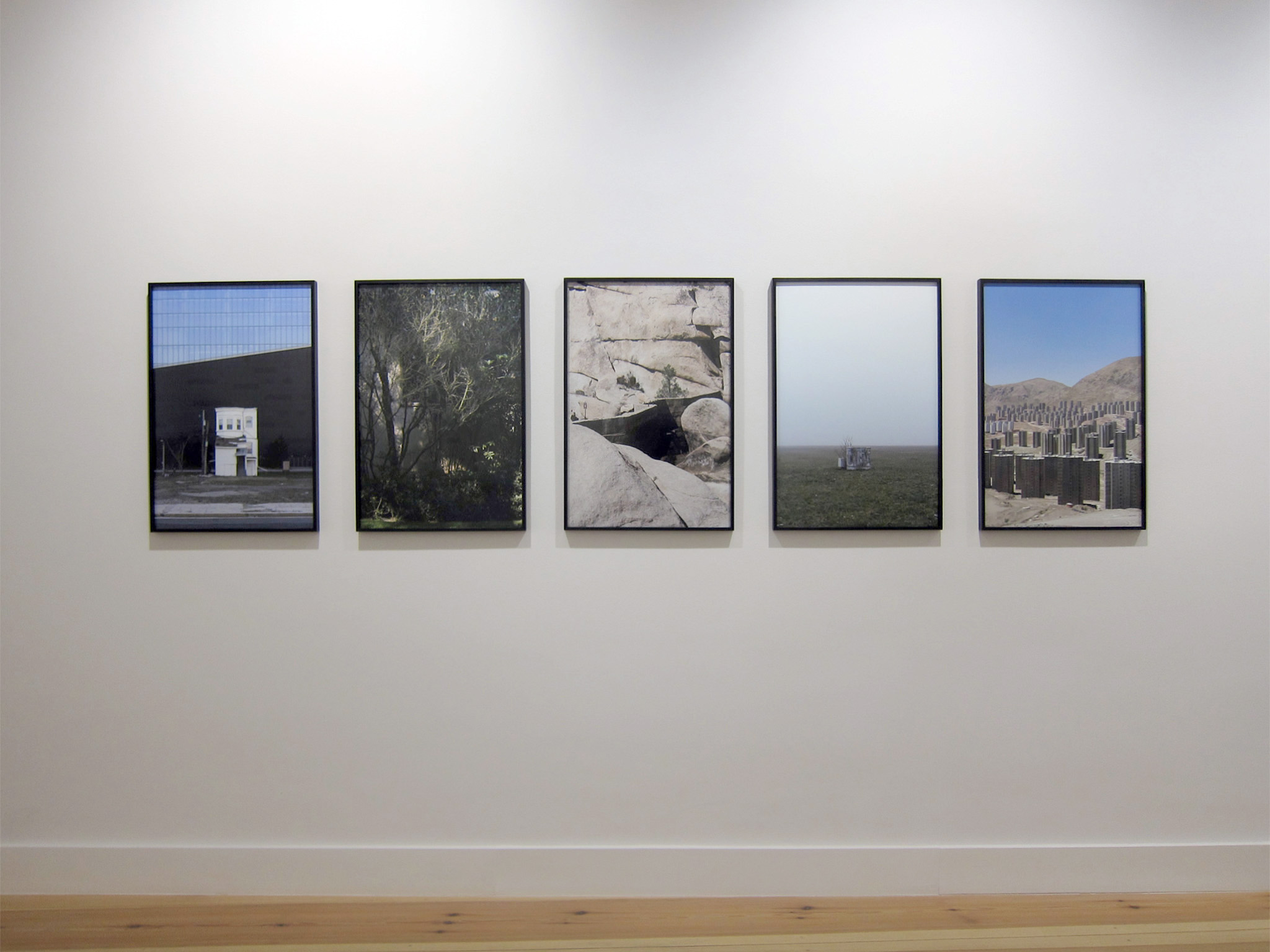
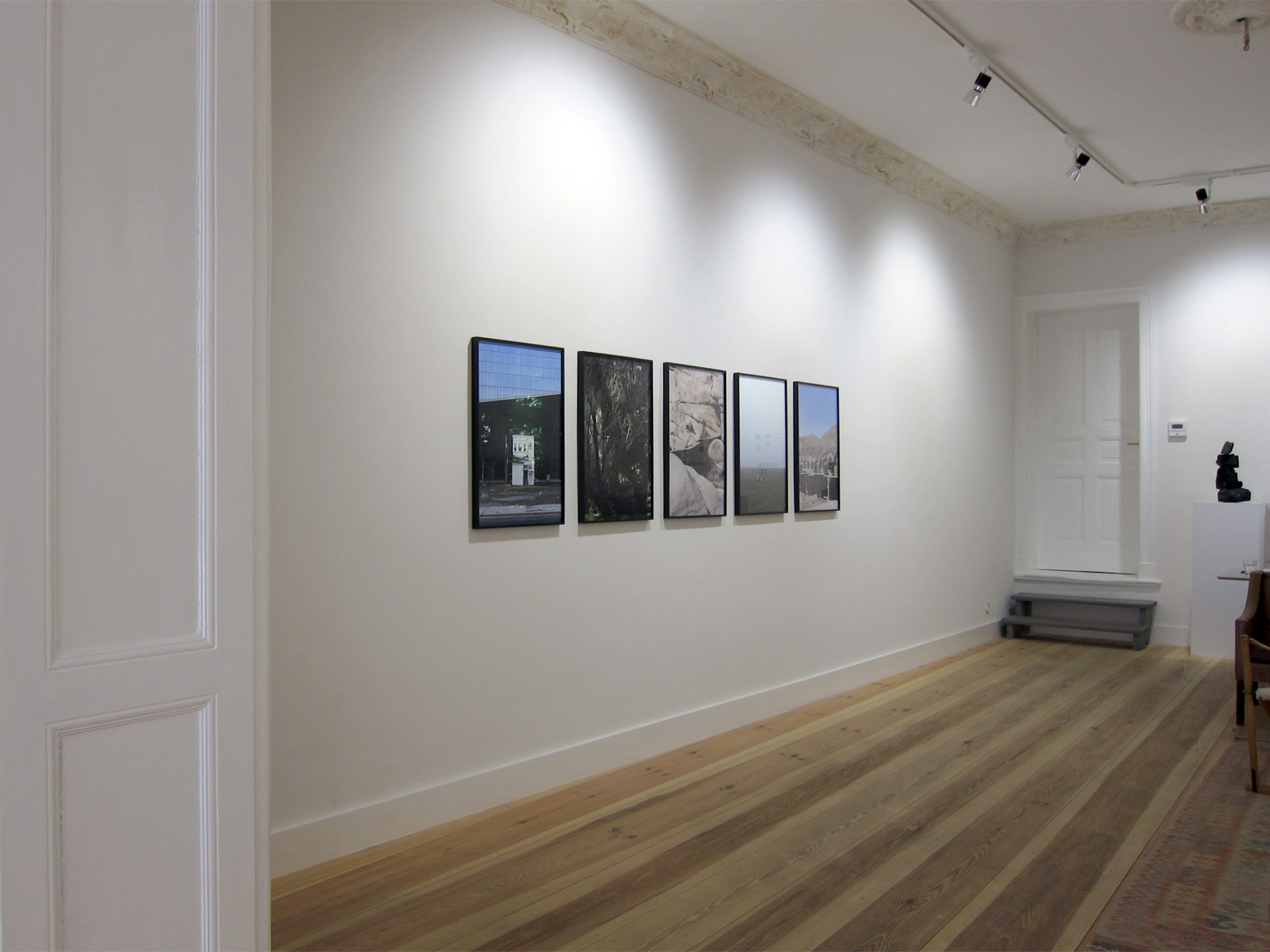
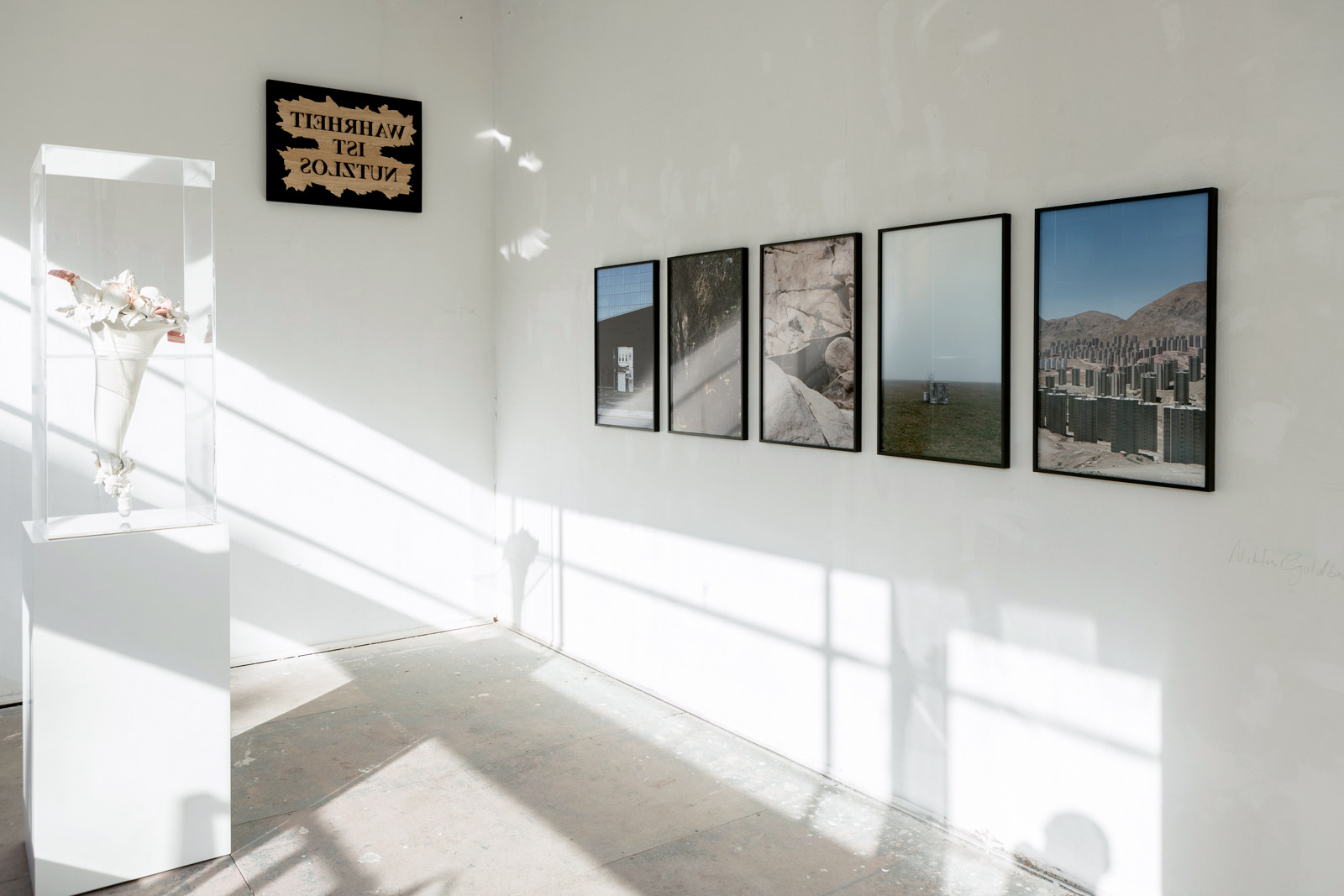
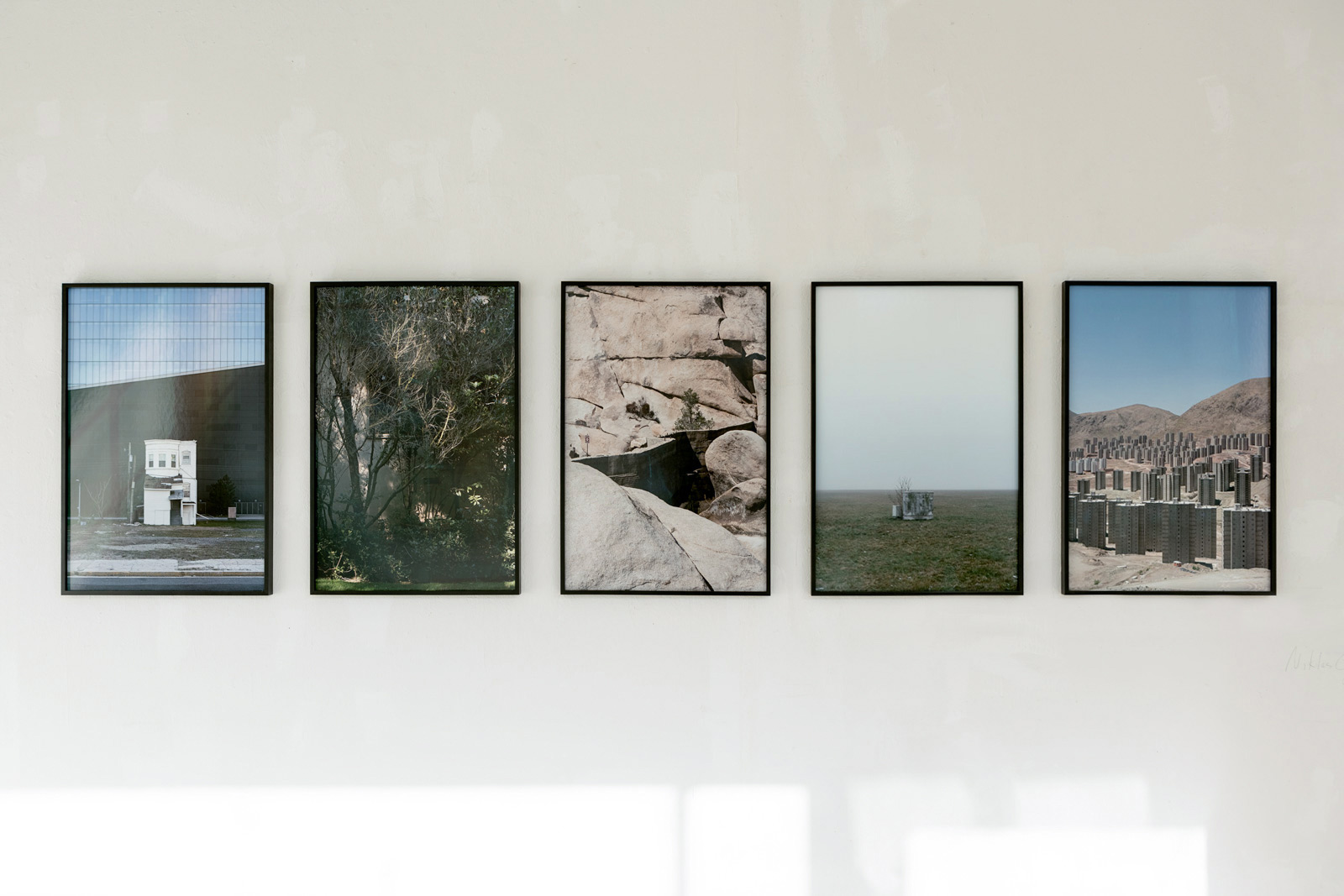
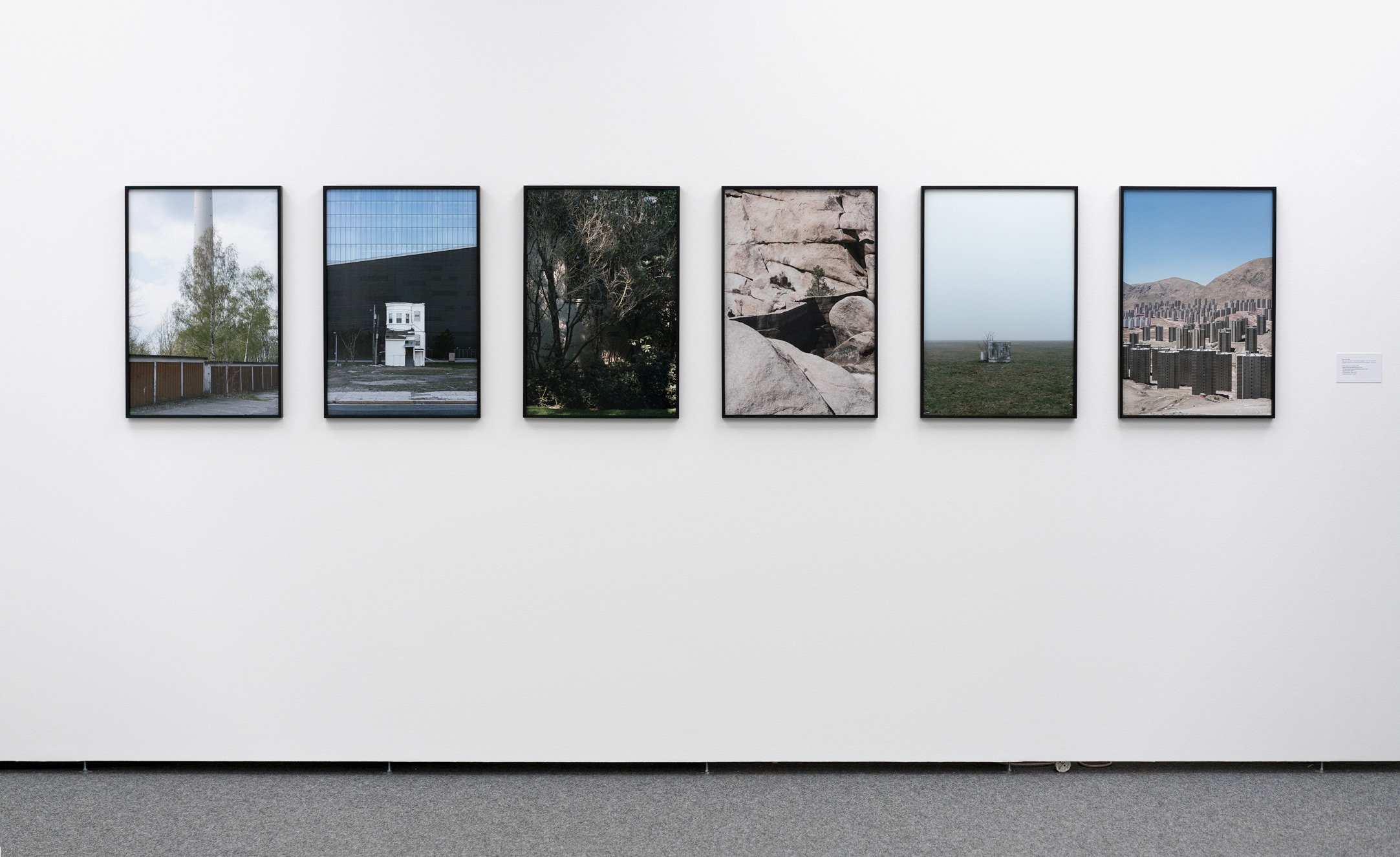
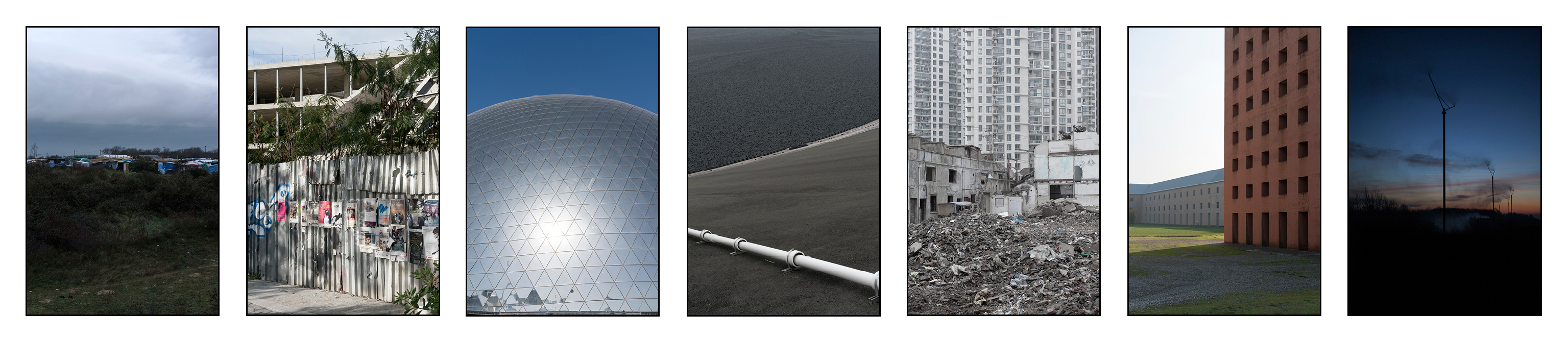
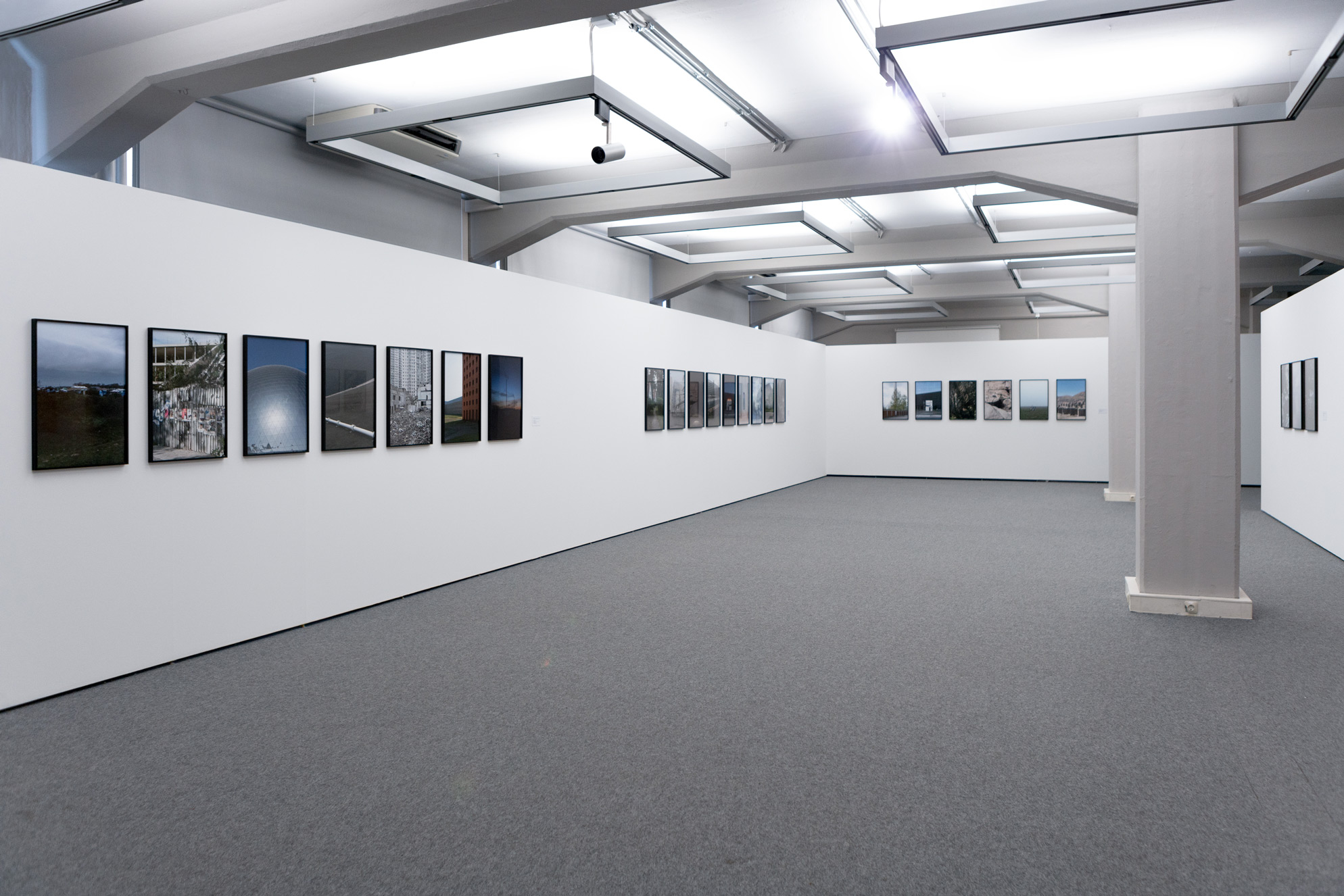
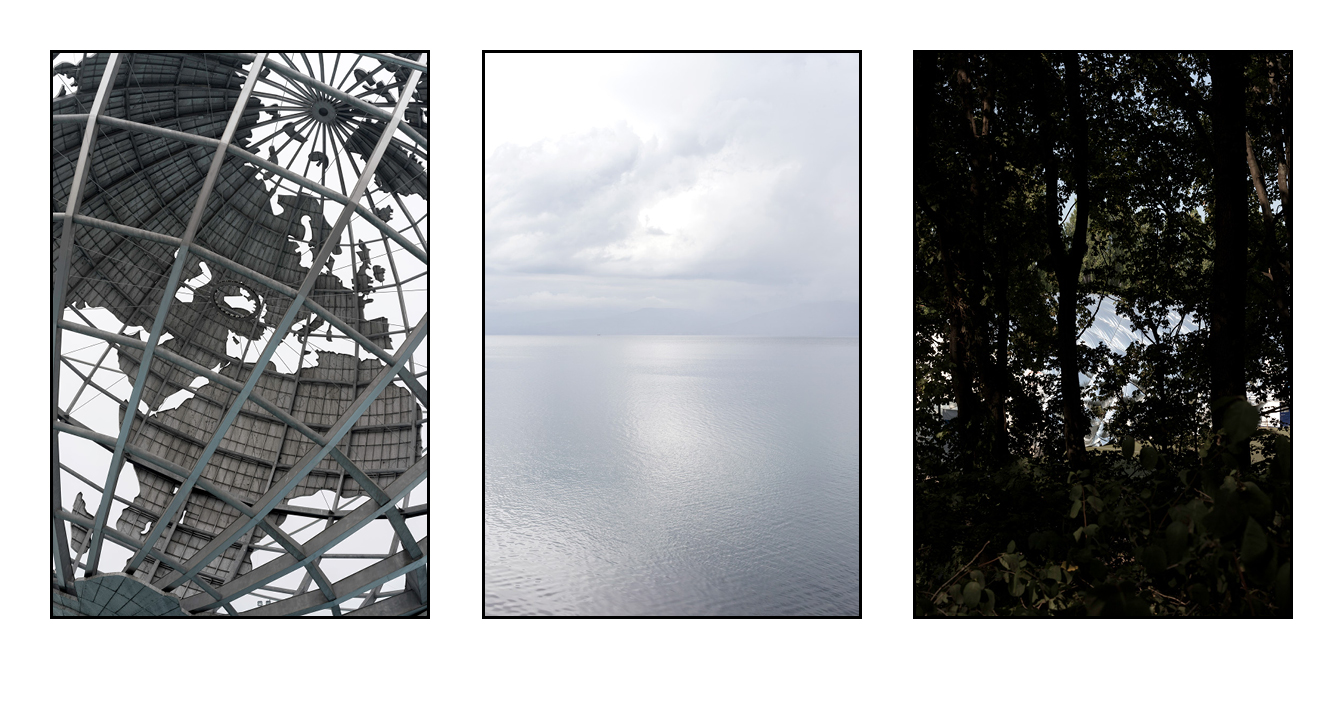
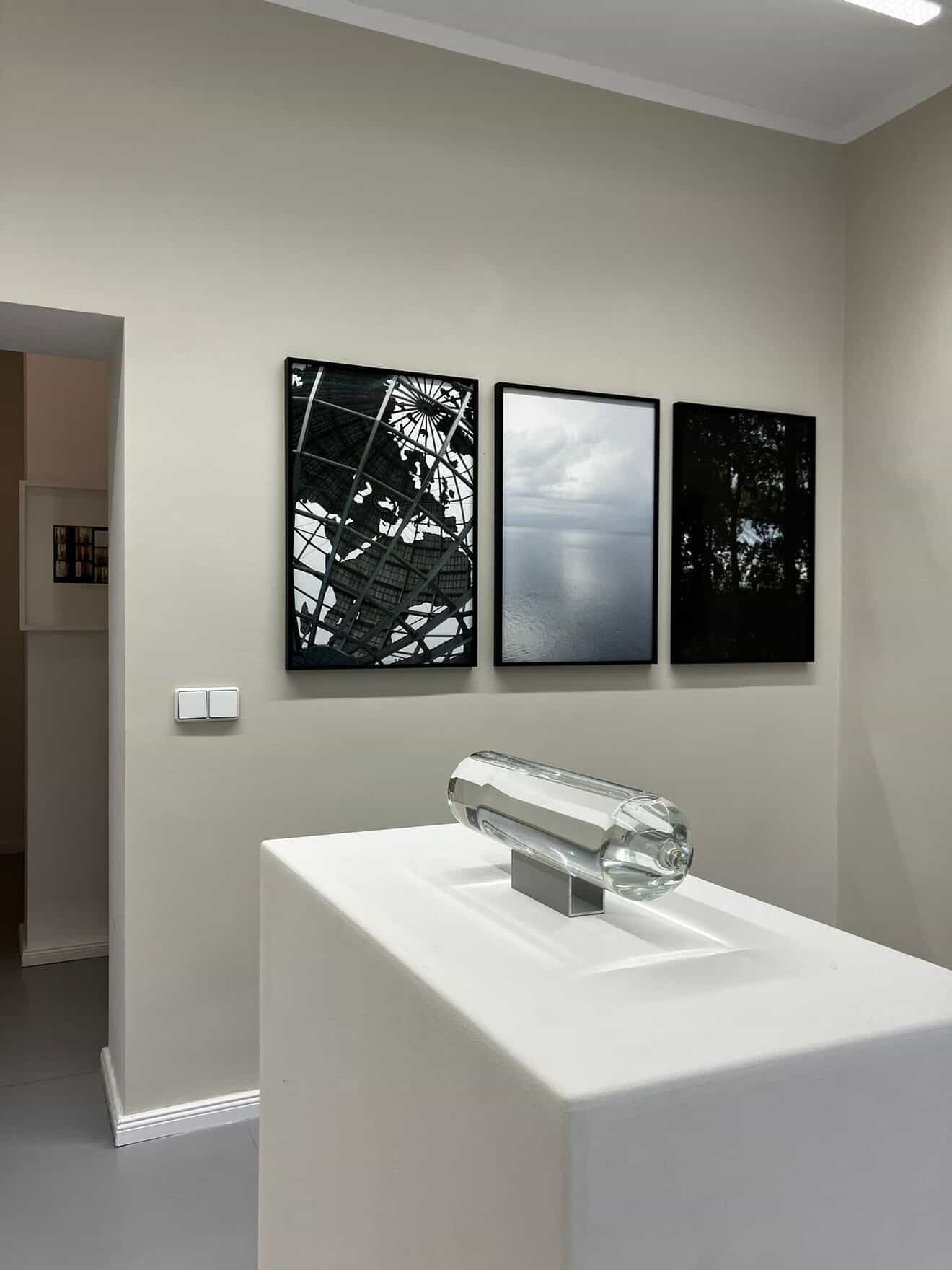
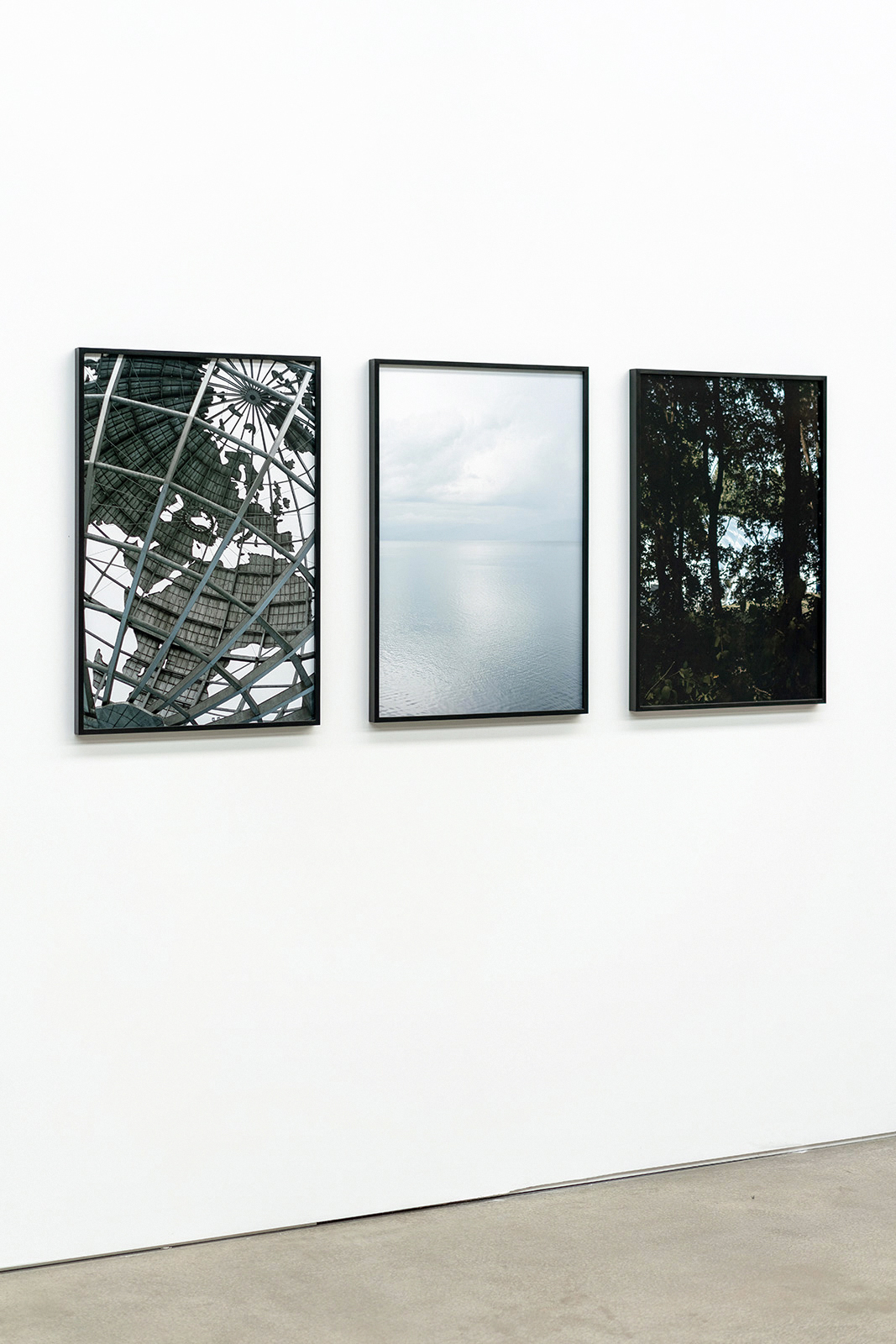
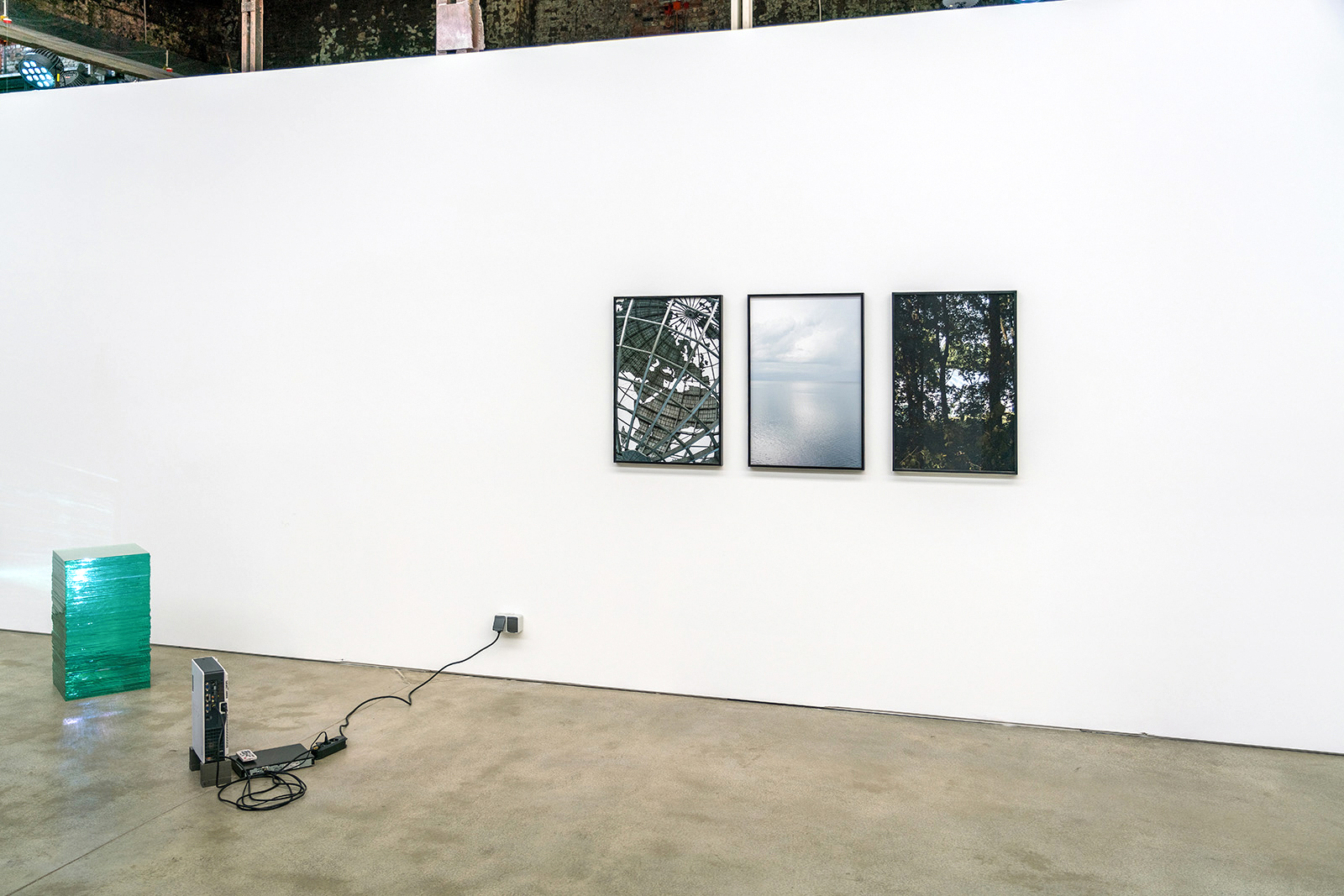
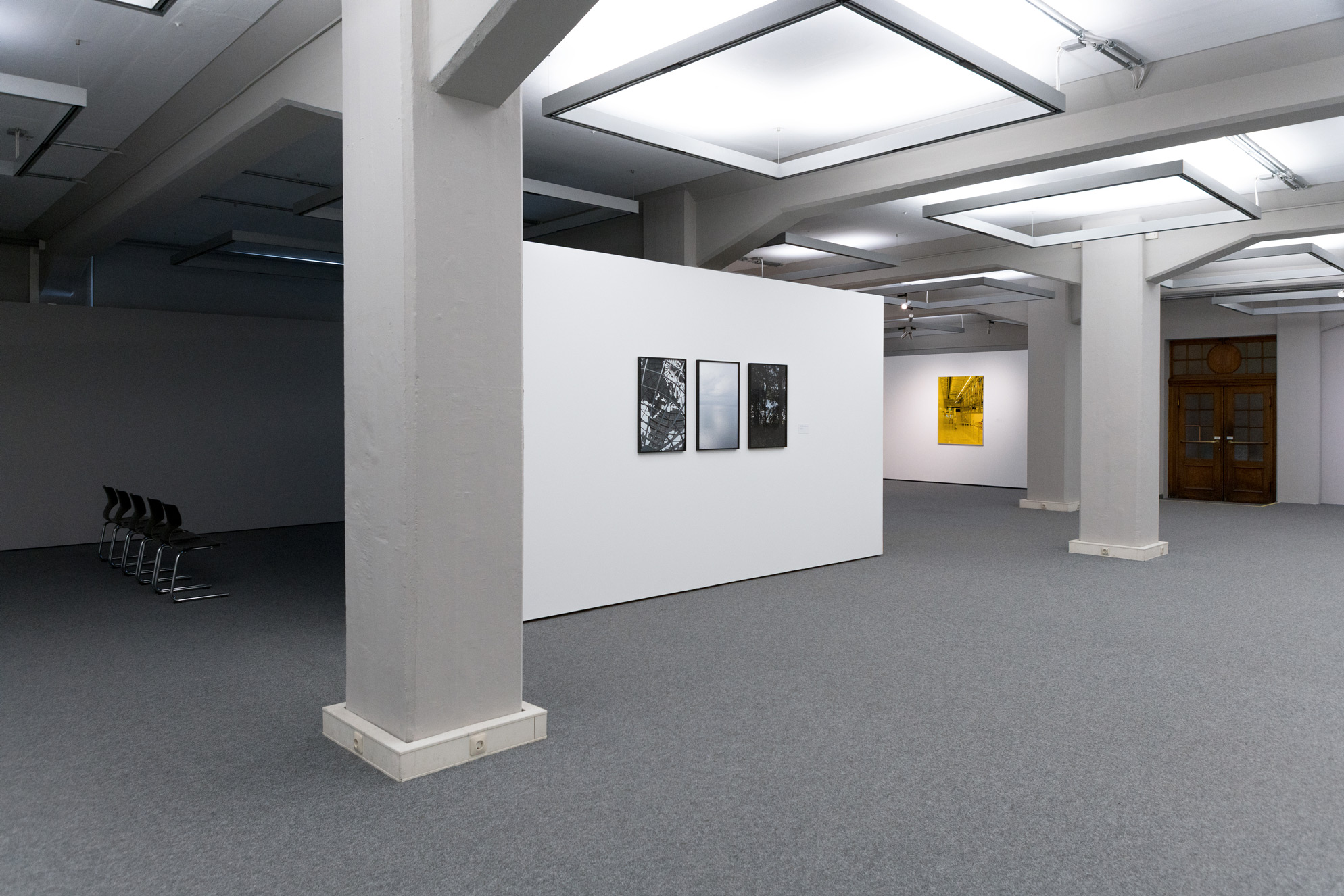

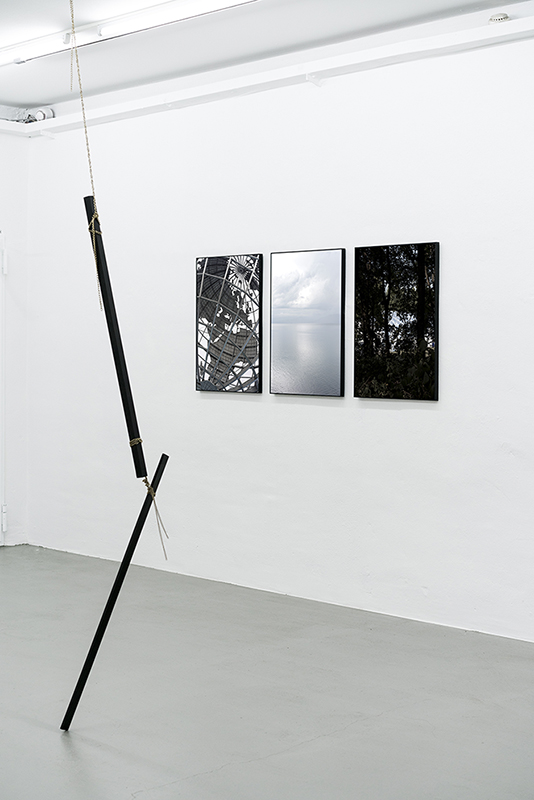
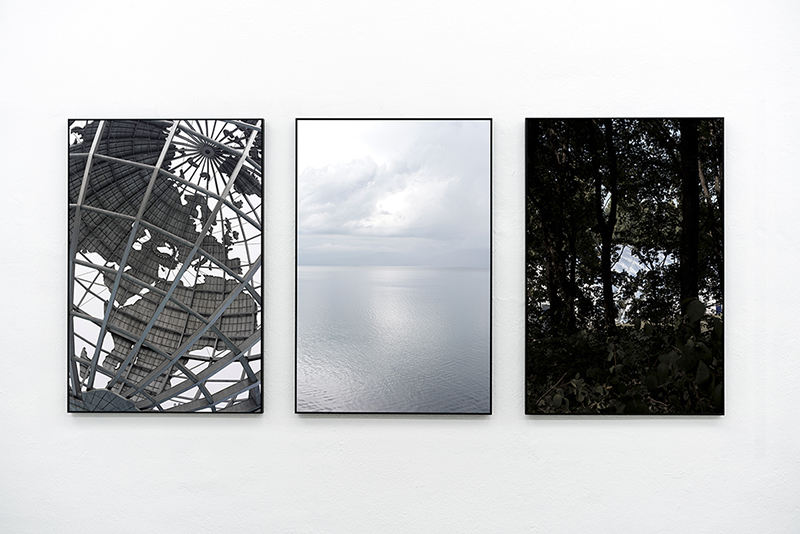
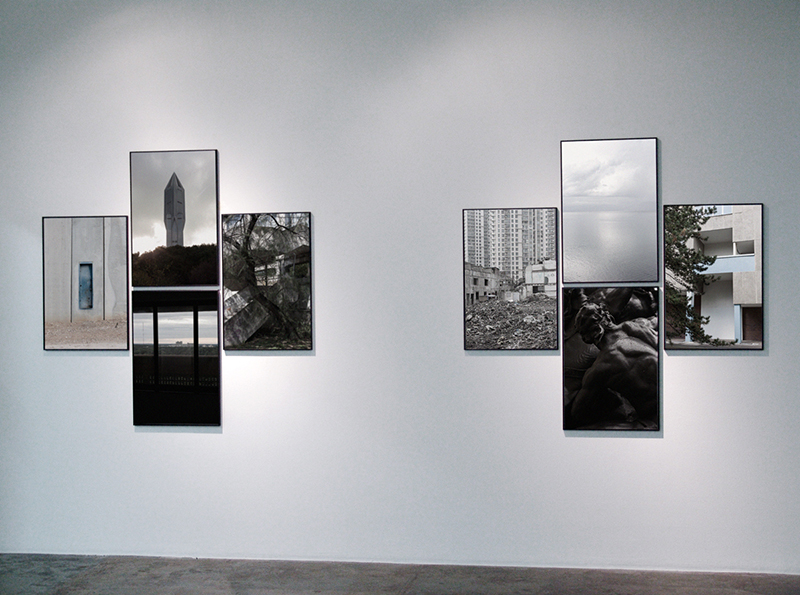
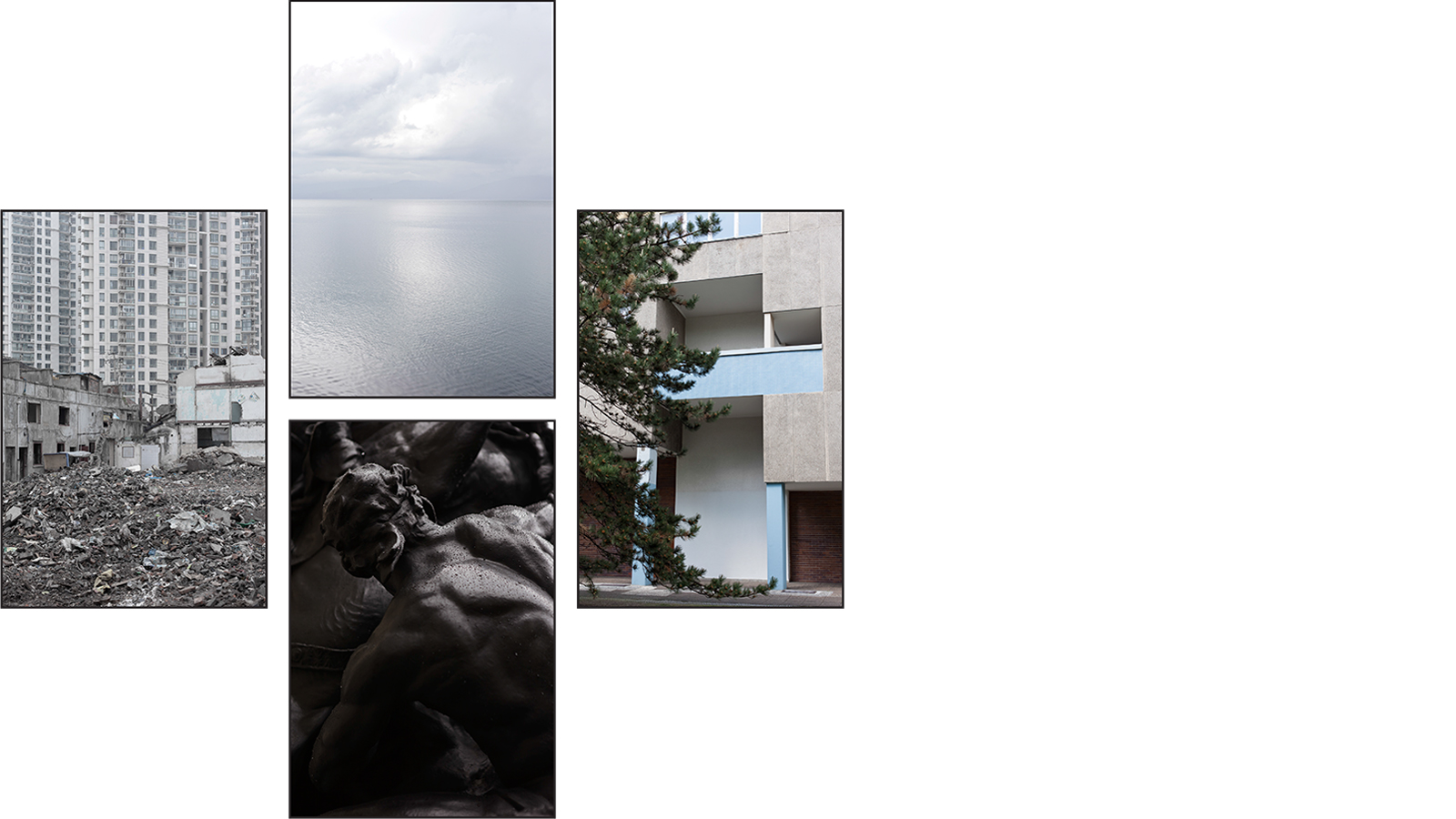
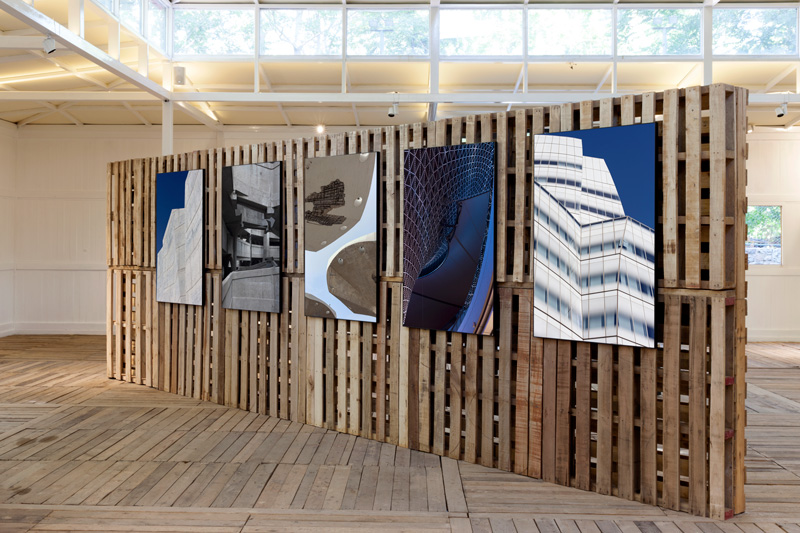
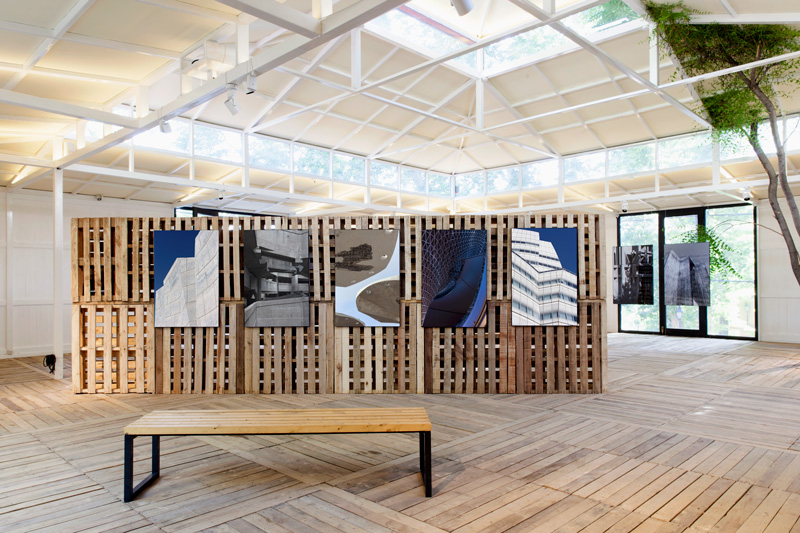
Initiated in 2013, Permanent Daylight is an ongoing photographic series of architectural sites and landmarks around the world. Until today, the series consists of more than 260* photographs. Photographed with a 50mm standard focal length in various places around the world, the series examines the concept of a growing global interconnectivity: the selected sites were either created or defined by human culture — yet they conspicuously lack any evidence of human presence. The photographs of this series are presented in individually titled and fixed constellations ("Groups") which form new essayistic contexts and narrative associations between the images. The title of the series refers to the phrase "the empire on which the sun never sets": variations of it have been used through history to describe global empires that were so extensive that at least one part of their territory was always in daylight.
Andreas Krase, exhibition text Niklas Goldbach: TRUST, Museum Technische Sammlungen Dresden, 2017
*498 in 10/2024
2013 begann Niklas Goldbach die Arbeit an Permanent Daylight, einem fotografischen Langzeitprojekt, das mittlerweile über 240* Fotogafien umfasst. Die Arbeit untersucht das Phänomen der zunehmenden globalen Interkonnektivität von konkretem Raum: Fotografiert mit einer 50mm Standardbrennweite, verweisen die weltweit fotografierten und menschenleeren Orte und Architekturen implizit auf die Absichten und Gesellschaftssysteme ihrer Erbauer. Durch die Präsentation der Fotografien in genau festgelegten Werkgruppen ergeben sich neue essayistische Narrative und Bedeutungszusammenhänge zwischen den Bildern - das einzelne fotografische Bild tritt in den Hintergrund. Der Titel der Serie bezieht sich auf die geläufige Phrase "das Reich in dem die Sonne niemals untergeht": Variationen dieses stolzen Ausspruchs wurden immer wieder durch die Jahrhunderte benutzt, um Weltreiche zu beschreiben, deren Ausdehnung über mehrere Kontinente dazu führte, dass immer irgendwo die Sonne schien.
Andreas Krase, Ausstellungstext Niklas Goldbach: TRUST, Museum Technische Sammlungen Dresden, 2017
*498 in 10/2024
| – |
In his photographs, videos, and installations, Niklas Goldbach explores the ambivalence of architectural utopias—their promise of terrestrial paradise and their dystopian realities. The spaces he documents condense the darker aspects of postmodern life, revealing how architecture functions both as a stage for and amplifier of neo-liberal and neo-colonial social structures. With his long-term photographic project Permanent Daylight, Goldbach has been exploring the disciplining and control of space and the body since 2013. The photographs, taken around the world, show man-made places—a large-scale housing project in a suburb of Tehran, a decommissioned wave power station in Øygarden, a luxurious shopping centre in Lisbon, a jail in Stuttgart—that bear visible traces of their past or the first signs of their impending transformation. They are silent testimonies to the worldviews and political systems from which they emerged. Without ever depicting people, the project questions the illusion of universal mobility and reveals the social inequalities of the globalized world. The title ironically refers to the colonial myth of 'the empire on which the sun never sets.
'Catalogue Text Global Fascisms, HKW Haus der Kulturen der Welt, 13.09.–07.12.2025. Curated by Cosmin Costinaș & Paz Guevara
In seinen Fotografien, Videos und Installationen beschäftigt sich Niklas Goldbach mit der Ambivalenz architektonischer Utopien – ihren Versprechen eines irdischen Paradieses und ihren dystopischen Kehrseiten. Die von ihm dokumentierten Räume verdichten die Schattenseiten postmoderner Lebenswelten und verdeutlichen, wie Architektur zur Bühne und zum Verstärker neoliberaler und neokolonialer Gesellschaftsstrukturen wird. Mit Permanent Daylight untersucht Goldbach seit 2013 die Disziplinierung und Kontrolle von Raum und Körper. Die Fotografien zeigen menschengemachte Orte weltweit – ein groß angelegtes Wohnungsbauprojekt in Pardis, einem Vorort Teherans, ein stillgelegtes Wellenkraftwerk in Øygarden, ein luxuriöses Einkaufszentrum in Lissabon, eine Justizvollzugsanstalt in Stuttgart – die sichtbare Spuren ihrer Vergangenheit oder erste Hinweise auf ihre bevorstehende Transformation zeigen. Sie sind stumme Zeugnisse der Weltanschauungen und politischen Systeme, die sie hervorbrachten. Ohne jemals Menschen abzubilden, hinterfragt das Projekt die Illusion universeller Mobilität und macht die sozialen Ungleichheiten der globalisierten Welt sichtbar. Der Titel verweist ironisch auf den kolonialen Mythos vom „Reich, in dem die Sonne nie untergeht".
Katalog Text Global Fascisms, HKW Haus der Kulturen der Welt, 13.09.–07.12.2025. Kkuratiert von Cosmin Costinaș & Paz Guevara
| – |
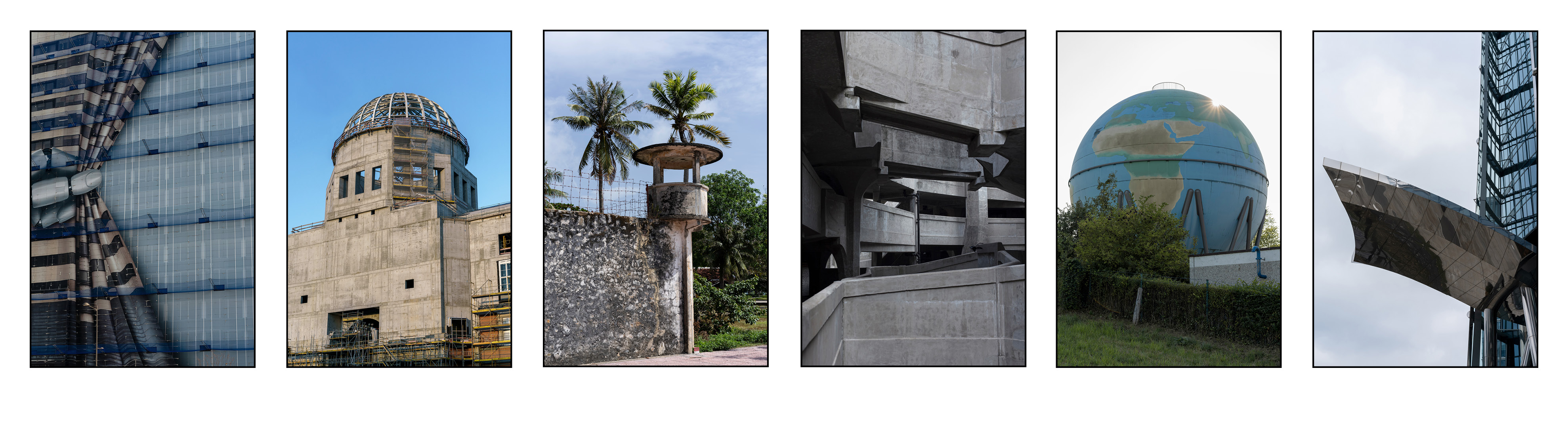
[…] Goldbach’s most extensive photographic work to date, Permanent Daylight, now comprises more than 500 images. It is not presented in uniform grids, however, but either individually or in clusters of varying size. This looser arrangement recalls the filmstriplike sequencing consistently used by Ed Ruscha in Every Building on the Sunset Strip (1966), where individual photos were strung together as if in a tracking shot and published as a leporello. But whereas Ruscha’s images show a real street in continuous sequence, the photographs in Permanent Daylight come from places all over the world. They are not grouped typologically but instead follow a kind of collage-like logic in which formal echoes and thematic correspondences open up shifting layers of meaning. The result is visual essays, such as the six-part series The Next Day—named after David Bowie’s penultimate album—which brings together places that seem to exist in a liminal zone between life and death. The series juxtaposes, for instance, David Chipperfield’s architectural extension of the Venetian cemetery island San Michele with the prison block in the Stuttgart district of Stammheim where several members of the Red Army Faction died.
Each photograph is initially produced as a standalone image. Goldbach explores each subject from multiple angles and takes numerous shots, from which he selects the ones he considers “valid”. He then assembles groups of images in a process akin to curating—selecting pictures that enter into dialogue with one another.
This process also reveals visual and thematic correspondences between geographically distant places. In that sense, what might be described as Goldbach’s “conceptual” approach only begins when he sifts through and assembles his material. When shooting, he does not adhere to the strict formal criteria of Bernd and Hilla Becher, with their front-facing views and uniform neutral lighting. Nonetheless, Goldbach does aim for a degree of neutrality in his portrayal of each subject. He consistently uses a 50mm lens—the widest distortion-free focal length—and works exclusively in portrait format, a staple of architectural photography for tall structures. His concern is never the architecture per se, but rather a portrait-like rendering of buildings and places. Subjective expression is not entirely suppressed, as it often is in conceptual photography. Nor does Goldbach seek to undermine the overtly “artistic” qualities of his work by mimicking the look of documentary or commercial photography. If his images undercut the conventions of architectural photography, they do not undermine the standards of “good” photography in the same way as Dan Graham’s Homes for America (1966), whose stereotypical suburban housing estates were captured “against the most elementary rules of correct photographic image composition”: “not really sharp, not properly exposed, verticals out of line and composition unbalanced.” By contrast, there is nothing technically or aesthetically objectionable about Goldbach’s work—yet it still rejects the professional norms of applied photography.
This marks a key distinction between Permanent Daylight and another, even more sprawling photographic project that might seem related in its global scope: Sichtbare Welt (Visible World) by Peter Fischli and David Weiss, presented in exhibitions either as slide projections or on a massive light table. In 2001, 2800 images were published in book form—views of cities, forests, seas, airports, suburbs, and industrial estates around the world. All the photos were reportedly taken by the artists themselves, but they resemble travel brochures, advertisements or stock photography—images intended to be generic rather than memorable or emotionally vivid.
Sichtbare Welt is thus an ironic reflection not on the visible world itself, but on how it is imaged and consumed. Everything remains on the surface. By contrast, each image in Permanent Daylight evokes the desire to move beneath that surface—to appropriate the subject, as it were.
For Fischli and Weiss, the absence of people marks a visual world detached from personal feeling and narrative. In Goldbach’s combinatory arrangement of images, by contrast, we glimpse the contours of a less alienated world in an age of globalization. […]
Ludwig Seyfarth, excerpt from The Built Environment and the Absence of People in the Work of Niklas Goldbach, catalogue Niklas Goldbach. Kunstpreis der Stadt Nordhorn 2023, Städtische Galerie Nordhorn, 2025
[…] Die bisher umfangreichste, bereits über 500 Aufnahmen umfassende Fotoarbeit Goldbachs, Permanent Daylight, wird jedoch nicht in Blöcken, sondern einzeln oder zusammengestellt zu kleineren oder größeren Gruppen gezeigt. Diese Anordnung folgt eher filmstreifenartigen Reihungen, wie sie etwa Ed Ruscha in Every Building on the Sunset Strip (1966) konsequent verfolgte, indem er die einzelnen Fotos wie zu einer Kamerafahrt zusammenfügte und als Leporello veröffentlichte. Dort hängt fotografisch zusammen, was auch real nebeneinandersteht. Bei Permanent Daylight hingegen stammen die Aufnahmen von unterschiedlichsten Orten in aller Welt. Die Zusammenstellung der Motive erfolgt auch nicht nach typologischen Gesichtspunkten. Die Gruppen oder Reihen folgen einer quasi collageartigen Kombinatorik, bei der Formen und Motive in formale Korrespondenzen gesetzt sind, aber auch unterschiedliche inhaltliche Bezüge eröffnet werden. Es entstehen visuelle Essays, wie etwa die sechsteilige, nach dem letzten Album von David Bowie benannte Serie The Next Day, die verschiedene Orte zusammenführt, die sich gleichsam in der Zone zwischen Leben und Tod bewegen. So steht David Chipperfields architektonische Erweiterung der venezianischen Friedhofsinseln San Michele neben dem Gefängnistrakt in Stuttgart-Stammheim, in dem mehrere Mitglieder der RAF starben.
Zunächst entstehen die Fotografien als Einzelbilder. Jedes Motiv erarbeitet sich der Künstler stets aus mehreren Blickwinkeln und macht zahlreiche Aufnahmen, aus denen er dann diejenigen auswählt, die er als „gültige“ ansieht. Bei der Zusammenstellung der Bildgruppen geht er dann fast wie ein Kurator vor, der verschiedene gut miteinander korrespondierende Bilder für eine Ausstellung auswählt.
Dabei entdeckt er auf den Fotografien auch formale und/oder inhaltliche Korrespondenzen zwischen Orten, die geographisch weit voneinander entfernt entstanden. So beginnt das, was man als „konzeptuelles“ Vorgehen beschreiben kann, bei Goldbach eigentlich erst, wenn er das Bildmaterial sichtet und zusammenstellt. Bei der Aufnahme selbst folgt er keinem strengen formalen Konzept wie etwa Bernd und Hilla Becher, bei denen die Motive stets frontal und bei gleicher neutraler Beleuchtung ins Bild gesetzt sind.
Eine gewisse Neutralität strebt jedoch auch Goldbach bei seiner Annäherung an das jeweilige Motiv an. Er nutzt stets die mit 50mm größte optisch verzerrungsfreie Brennweite und bleibt konsequent im Hochformat, das in der Architekturfotografie eher bei hohen Bauten zum Einsatz kommt. Es geht ihm nie um das Gebäude, um die Architektur als solche, sondern er macht eher Porträts der Gebäude oder Orte. Der subjektive Ausdruck ist dabei nicht so konsequent vermieden wie bei fotografischer Konzeptkunst üblich. Ebenfalls nicht zu konstatieren ist das bewusste Unterlaufen des offenkundig „Künstlerischen“, das sich bei konzeptueller Fotografie etwa in der Annäherung an Standards der Dokumentarfotografie oder an kommerzielle Bildformate zeigt. Und wenn Goldbach übliche Architekturfotografie unterläuft, dann nicht die Standards „guter“ Fotografie, wie es Dan Graham tat, als er für Homes for America (1966) stereotype Vorstadtsiedlungen „gegen die elementarsten Regeln korrekter fotografischer Bildgestaltung“ ins Bild setzte. Hier sind die Fotos „nicht richtig scharf, nicht richtig belichtet, die vertikalen Linien stürzen und die Komposition ist nicht ausgewogen“. Gegen Goldbachs Bilder hingegen lässt sich in technischer und handwerklicher Hinsicht nichts „einwenden“. Allerdings folgen sie keinen professionellen Standards angewandter Fotografie.
Hier liegt denn auch ein wesentlicher Unterschied von Permanent Daylight zu einem noch umfangreicheren künstlerischen Fotoprojekt, das in seiner quasi globalen Ausrichtung zunächst verwandt erscheinen könnte. Es handelt sich um Sichtbare Welt von Peter Fischli und David Weiss, das in Ausstellungen als Projektion oder als Dias auf einem gigantischen Leuchttisch projiziert wird. 2800 Bilder wurden 2001 in Buchform publiziert. Zu sehen sind Ansichten von Städten, Wäldern, Meeren, Flughäfen, Vorstädten, Gewerbegebieten in aller Welt. Alle Fotos stammen (zumindest wird es behauptet) von den Künstlern selbst, sehen aber so aus, als ob es Aufnahmen aus Reise- oder Werbeprospekten sind oder Stockfotografien, die keine Memorabilität oder emotionale Eindringlichkeit entfalten sollen. So ist Sichtbare Welt eine auch ironische Auseinandersetzung eher damit, wie die Welt ins Bild gesetzt wird und wir mit den Bildern umgehen als mit der sichtbaren Welt selbst. Alles bleibt gleichsam an der Oberfläche, während jedes einzelne Bild in Permanent Daylight das Bedürfnis erkennen lässt, auch hinter die Oberfläche des Motivs durchzudringen, es sich gleichsam anzueignen.
Bei Fischli und Weiss ist die Abwesenheit von Menschen Kennzeichen einer Bilderwelt, die sich von jedweder Anbindung an persönliche Empfindungen und Narrative löst. Niklas Goldbachs Kombinatorik der Bilder hingegen entwirft die Umrisse einer weniger entfremdeten Welt im Zeitalter der Globalisierung. […]
Ludwig Seyfarth, Auszug aus Die gebaute Umwelt und die Abwesenheit von Menschen im Werk von Niklas Goldbach, Katalog Niklas Goldbach. Kunstpreis der Stadt Nordhorn 2023, Städtische Galerie Nordhorn, 2025
| – |
[…] Niklas Goldbach’s artistic practice is fundamentally shaped by the medium of photography. One of his core projects is presented throughout the exhibition in the form of several photographic series, serving both as a formal and thematic framework. Permanent Daylight is a collection of photographs, primarily architectural in nature, which Goldbach has been expanding since 2013. On closer inspection, however, these images depart notably from the familiar conventions of this traditional photographic genre. Now comprising several hundred photographs, the project is subdivided into multiple series.
The title Permanent Daylight itself evokes a curiously global dimension alluding to an old colonial fantasy—such as that of nineteenth-century Britain—of establishing a world empire on which the sun never sets. Today, that imperial force is of course globalization, and the dominant visual code of the present era is modernity. In the twentieth century, it was above all architecture and urban planning that shaped an unprecedented universal culture—one that, on the basis of economics and technology, generated an internationally comprehensible and recognizable visual language. However, these modern forms are frequently interwoven with references to architectural history or local building traditions, offering—alongside modernity and cosmopolitanism—a kind of regional cultural identity. Furthermore, modernity has always been defined not only by a fascination with the new and with progress, but also by the ever-present threat of failure and decay. Even the term “modern” itself implies an inherent obsolescence. Goldbach explores these tensions and contradictions through subtle aesthetic means, transforming them into a nuanced photographic language.
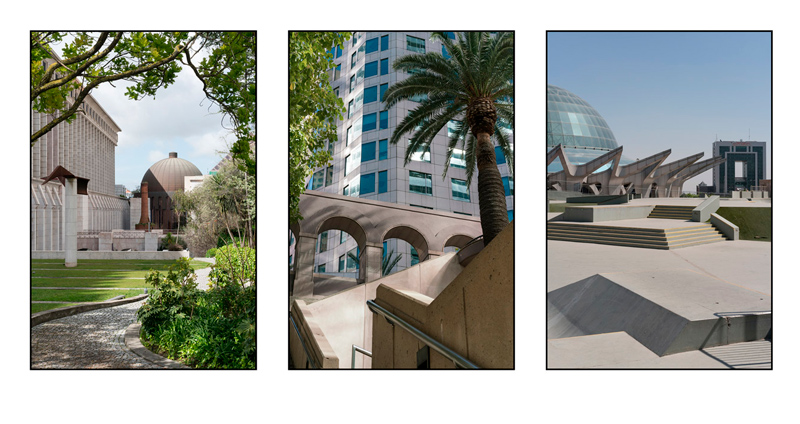
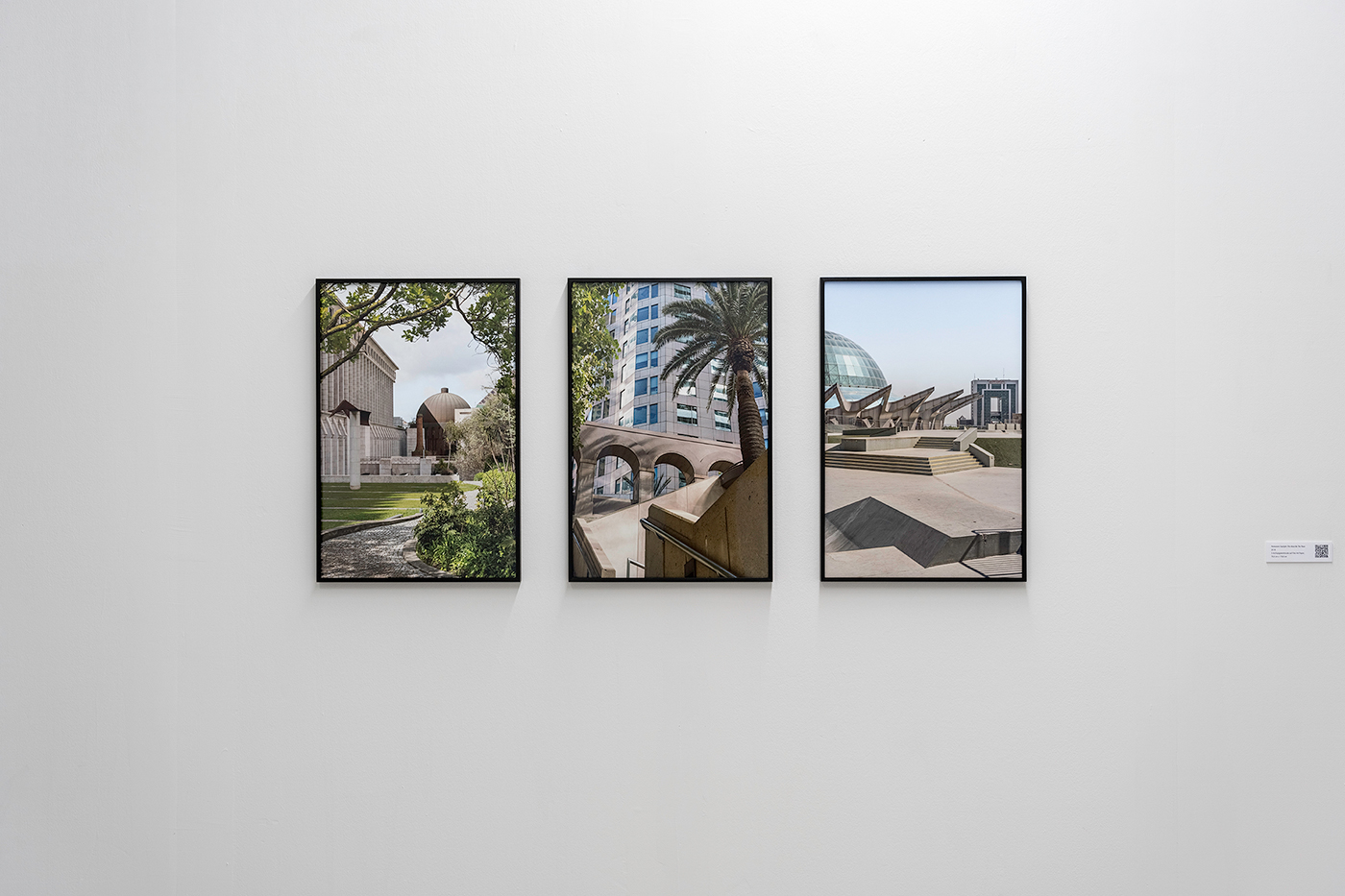
This principle is clearly evident in the three-part group This must be the place (2018). At first glance, it gives an impression of visual homogeneity, achieved primarily through photographic techniques: first, a consistent color palette dominated by shades of gray, blue, and green; second, the repetition of certain shapes, such as the semicircle; and third, the spatial structure, with each image composed from a low vantage point looking onto an indirect approach in the foreground, and a building only partially visible in the background. This creates a visual flow across the three pictures—or, when viewed more attentively, a subtle narrative of forms and structures that unfolds from left to right, seen for example in the diminishing presence of vegetation or the increasing prominence of diagonal lines.
Yet the usual cues of functional architectural photography—those that would allow precise identification of the buildings or their locations—are absent. The images neither reveal the overall appearance of the buildings nor give any indication of the surrounding urban context. Nor do they include people. It is thus all the more surprising to learn that the buildings depicted are in fact located far apart: in Lisbon (the headquarters of Caixa Geral de Depósitos), Los Angeles (U.S. Bank Tower), and Tehran (Abo Atash Skate Park with the Gonbad-e-Mina Planetarium in the background).
Despite the heterogeneity of the individual series in terms of geography, form, and content, the Permanent Daylight project is unified by a rigorously consistent conceptual approach to both execution and display: all works are presented in identical frames, with uniform image sizes and carefully calibrated spacing between them. This photographically precise yet deliberately estranging engagement with architectural forms and urban development is a recurring principle in Goldbach’s work. […]
Thomas Niemeyer, excerpt from The Fascination and Failure of Urban Visions: An Artistic Journey Around the World, catalogue Niklas Goldbach. Kunstpreis der Stadt Nordhorn 2023, Städtische Galerie Nordhorn, 2025
[…] Die künstlerische Arbeitsweise von Niklas Goldbach ist wesentlich von der Technik der Fotografie bestimmt, und entsprechend findet sich eines seiner zentralen Projekte in Form verschiedener Gruppen von Fotografien an mehreren Punkten der Ausstellung – als formale und inhaltliche Klammer zugleich: Permanent Daylight ist eine seit 2013 fortlaufend erweiterte Sammlung von Fotografien, die zumeist Architekturansichten zeigen. Sie unterscheiden sich jedoch bei genauerer Betrachtung signifikant von den geläufigen Kategorien dieses eigentlich klassischen Genres der Fotografie. Das Projekt umfasst inzwischen mehrere hundert Bilder, die in zahlreichen Gruppen zusammengefasst werden. Schon der Titel des permanenten Tageslichts entfaltet eine eigenartig globale Dimension, indem er sich auf eine alte koloniale Phantasie bezieht, wie etwa die Großbritanniens im 19. Jahrhundert, die einen Anspruch auf Errichtung von Weltreichen repräsentiert, in denen buchstäblich die Sonne nie untergeht. Das heutige Weltreich ist natürlich das der Globalisierung, und der zentrale visuelle Code des Zeitalters ist die Moderne. Tatsächlich haben vor allem die Architektur und der Städtebau im 20. Jahrhundert eine in der Geschichte beispiellose, universale Kultur geprägt, die auf der Grundlage von Ökonomie und Technologie eine über alle Grenzen hinweg lesbare und wiedererkennbare Formensprache hervorgebracht hat. Gleichzeitig mischen sich diese Formen immer wieder mit architektonischen Zitaten aus der (Bau-) Geschichte oder Traditionen, so dass zusätzlich zu Modernität und Weltläufigkeit oft auch eine Art von regionaler kultureller Identifikation angeboten wird. Die Moderne ist außerdem seit jeher sowohl von der Faszination des Neuen und des Fortschritts als auch der Möglichkeit des Scheiterns und des Verfalls geprägt. Schon der Begriff „modern“ enthält ja das schnelle Veralten bereits in sich. Goldbach spürt solchen Widersprüchen und Spannungen mit feinen ästhetischen Mitteln nach und wandelt sie in eine vielschichtige fotografische Bildsprache um.
In der dreiteiligen Gruppe This must be the place (2018) lässt sich dieses Prinzip sehr gut erkennen. Hier entsteht auf den ersten Blick der Eindruck einer gewissen Homogenität, was vor allem durch fotografische Mittel erreicht wird: erstens durch eine einheitlich wirkende Farbigkeit mit dominierenden Grau-, Blau- und Grüntönen, zweitens durch eine Wiederholung bestimmter Formen, wie etwa dem Halbkreis und drittens durch die räumliche Struktur mit jeweils einer niedrigen Perspektive auf die indirekte Zuwegung im Vordergrund und das nur teilweise sichtbare Gebäude im Hintergrund. So entsteht beim Betrachten ein optischer Fluss zwischen den drei Einzelbildern oder sogar, wenn man etwas tiefer in die Details eindringt, eine kleine Erzählung der Formen und Strukturen, die sich von links nach rechts etwa im abnehmenden Anteil der Vegetation oder in den dominanter werdenden Diagonalen zeigt. Dennoch fehlen jeweils die typischen Informationen der funktionalen Architekturfotografie, die eine genauere Identifikation des Gebäudes oder Ortes ermöglichen würden. Die Fotos zeigen weder die Gesamtgestalt des Gebäudes, noch geben sie einen Eindruck vom städtebaulichen Umfeld. Ebenso fehlen jegliche Menschen. Und so mag es dann überraschen, dass die fotografierten Orte tatsächlich sehr weit auseinanderliegen, nämlich in Lissabon (Caixa Geral de Depósitos), Los Angeles (U.S. Bank Tower) und Teheran (Abo Atash Skate Park mit dem Gonbad-e-Mina Planetarium im Hintergrund). So heterogen die einzelnen Gruppen in den geographischen, formalen oder auch thematischen Bezügen sind, die übergreifende Verbindung der Reihe Permanent Daylight besteht in einer sehr klaren konzeptionellen Strenge bei der Ausführung und Präsentation mit stets identischen Rahmen, Bildgrößen und Abständen bei der Hängung. Diese fotografisch präzise und zugleich verfremdende Verarbeitung von Formen der Architektur und des Städtebaus sind ein wiederkehrendes Prinzip in Goldbachs Arbeiten. […]
Thomas Niemeyer, Auszug aus Faszination und Scheitern urbaner Visionen – eine künstlerische Weltreise, Katalog Niklas Goldbach. Kunstpreis der Stadt Nordhorn 2023, Städtische Galerie Nordhorn, 2025
| – |
[…] Niklas Goldbach's photographic and video works also deal with towers and building pits – both literally and figuratively. They look at architecture as a paradise machine, at projects that reach for the stars or at least hold the promise of a small paradise on Earth, at their mass production – and their dystopian downsides. The buildings and structures they document always attempt to create a secular, often (petty) bourgeois yet never socialist paradise and demonstrate how quickly such attempts can turn into their opposite. The paradise machines they depict are diverse in nature: uncompleted housing developments in sprawling new neighbourhoods straight from the drawing board, artificial islands as failed investment properties, architectural remnants of model cities in the desert (California City), socialist prefabricated buildings in Berlin-Lichtenberg, the AIDA cruise ship, the huge underground train station Stuttgart21 or the village-swallowing pit of the open-cast lignite mine in Garzweiler. Another photograph from the Permanent Daylight series (ongoing since 2013) shows the Vietnamese island of Côn Đảo, which served as a prison and torture chamber until 1975 and is now a popular holiday destination […].
Inke Arns, excerpt from The Paradise Machine – Of Towers and Foundation Pits in the Works of Niklas Goldbach. Introductory text to the exhibition publication The Paradise Machine, HMKV Dortmund, 16.03.–01.09.2024
[…] In Niklas Goldbachs Foto- und Videoarbeiten geht es ebenfalls um Türme und Baugruben – im konkreten wie im übertragenen Sinne. Es geht um Architektur als Paradiesmaschine, um Projekte, die nach den Sternen greifen oder zumindest ein kleines Paradies auf Erden versprechen, um ihre massenweise Fabrikation – und um ihre dystopischen Kehrseiten. Die von Goldbach dokumentierten Architekturen versuchen sich dabei immer an der Erschaffung eines diesseitigen (oft [klein]bürgerlichen, jedoch nie sozialistischen) Paradieses – und zeigen, wie schnell solche Versuche in ihr Gegenteil umkippen können. Die dargestellten Paradiesmaschinen sind dabei vielfältiger Natur: Es kann sich um nicht fertiggestellte Wohnbebauungen in riesigen, am Reißbrett geplanten neuen Stadtvierteln handeln, um künstliche Inseln als gescheiterte Anlageobjekte, um architektonische Überreste von Modellstädten in der Wüste (California City), sozialistische Plattenbauten in Berlin-Lichtenberg, das Kreuzfahrtschiff AIDA, den riesigen unterirdischen Bahnhof Stuttgart 21 oder die Dörfer verschlingende Grube des Braunkohletagebaus in Garzweiler. Ein weiteres Foto aus der Serie Permanent Daylight (seit 2013) zeigt ein Gefängnisgebäude unter Palmen auf der vietnamesischen Insel Côn Đảo. Diese war bis 1975 eine reine Gefängnis- bzw. Folterinsel und ist heute eine beliebte Urlaubsdestination […].
Inke Arns, Auszug aus Die Paradiesmaschine - Von Türmen und Baugruben in den Arbeiten von Niklas Goldbach. Einleitungstext zur Ausstellungspublikation The Paradise Machine, HMKV Dortmund, 16.03.–01.09.2024
| – |
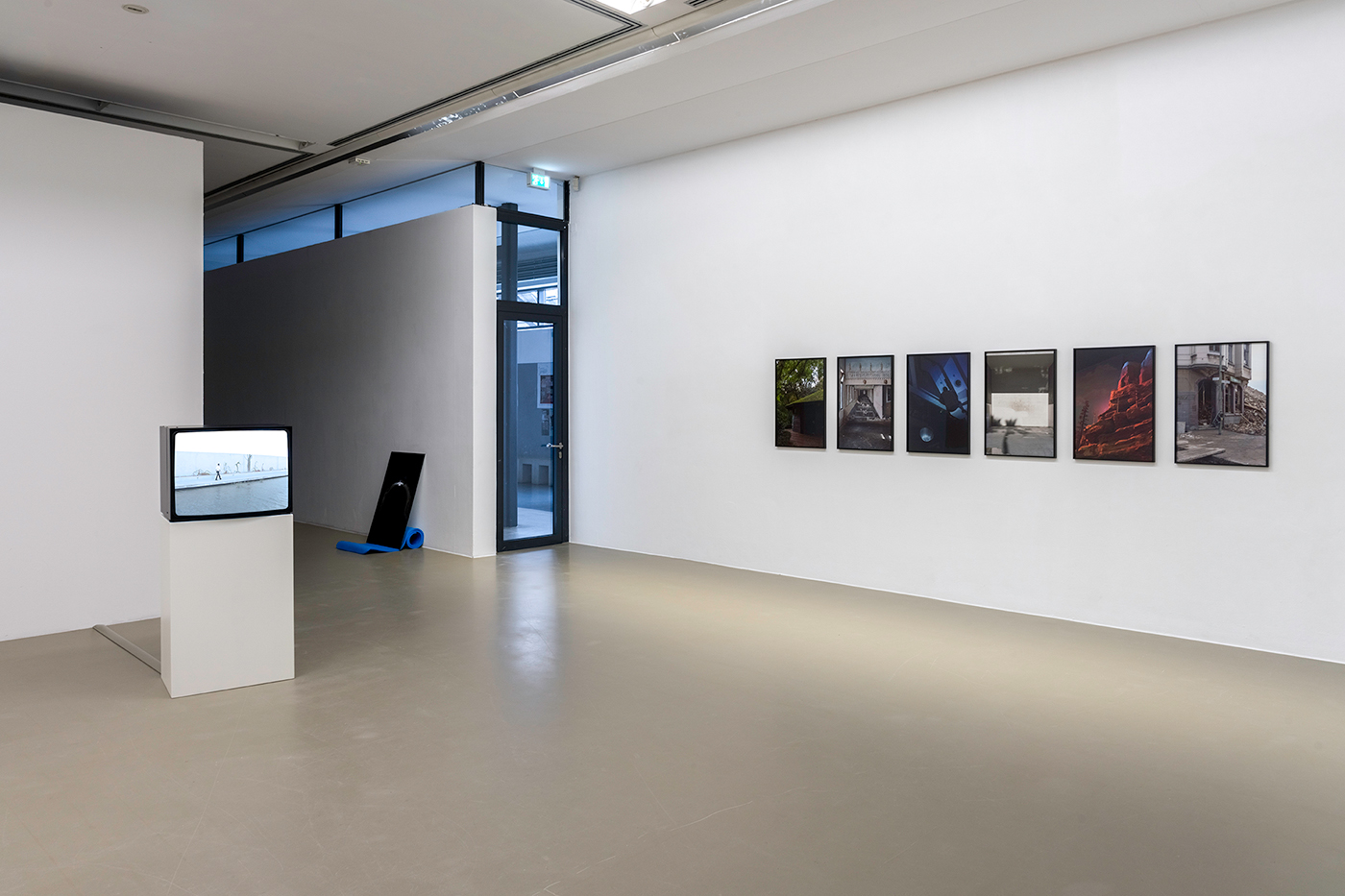
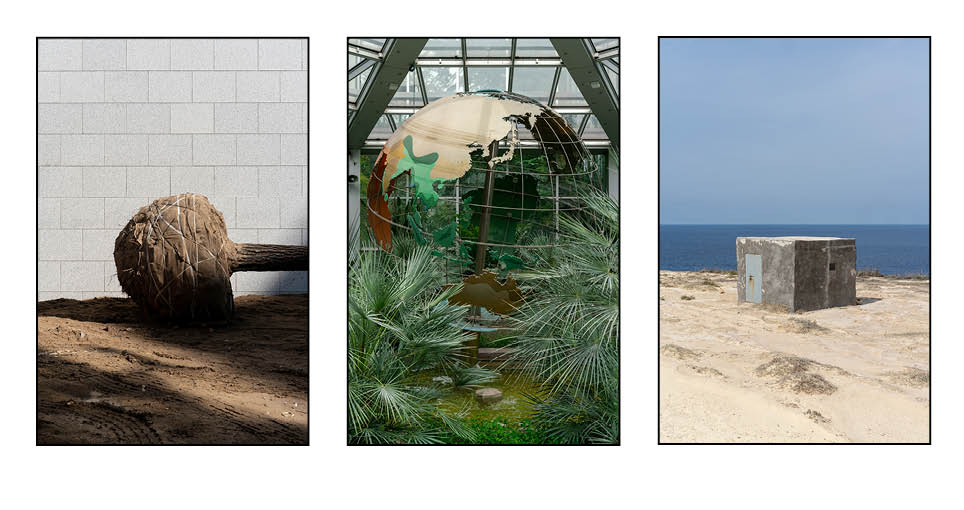
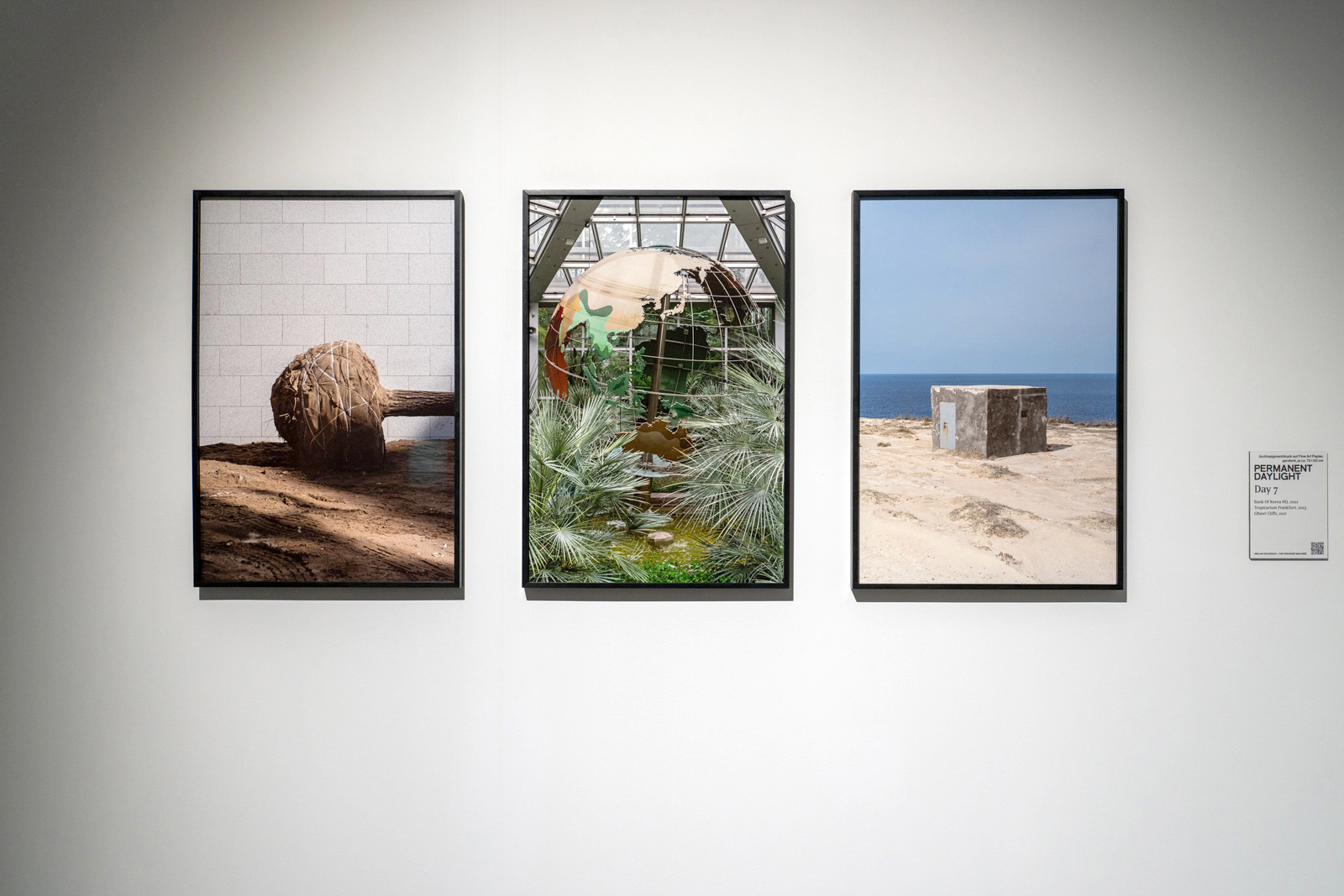
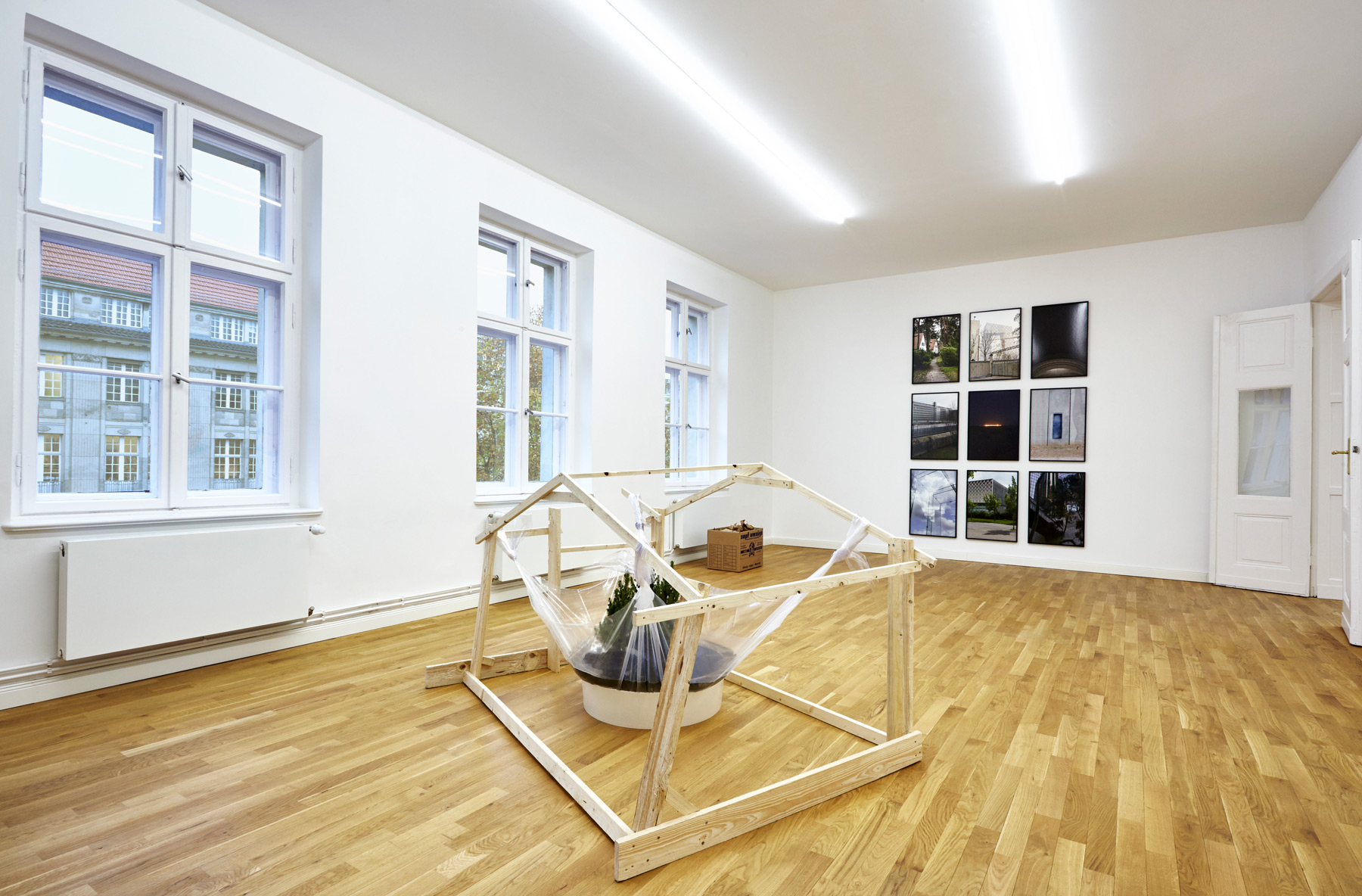
In Niklas Goldbach's exhibition The Paradise Machine, the reflections on the structures and contexts of Center Parcs outlined here are negotiated in various ways in and between the works on display. Besides works that refer directly to the Center Parcs, such as the video Into the Paradise Machine, the photographs from his series Permanent Daylight also relate to aspects of, and entanglements between, mass tourism, colonialism and the standardisation and disciplining of space and bodies: for instance, the globe in the 1980s-built Tropicarium in Frankfurt's Botanical Gardens, the floating hotel and experience machine AIDA, a holiday resort on the former Vietnamese prison and torture island of Côn Đảo or the headquarters of Frontex – in counterpart, so to speak, to the low-cost mass tourism of a supposedly global world that is by no means open to all and where boat trips are synonymous with pleasure for some but with death for others. The photographs are shown alongside other objects – including excerpts of the Derksen-funded Lumen TV programme – in 'bungalows' inspired by the Center Parcs architecture.
Iris Dressler, Excerpt from Soft Cops, Essay of the exhibition publication The Paradise Machine, HMKV Dortmund, 16.03.–01.09.2024
[…] Die von mir skizzierten Überlegungen zu Strukturen und Kontexten der Center Parcs werden in Niklas Goldbachs Ausstellung The Paradise Machine auf verschiedene Weise in und zwischen den hier gezeigten Werken verhandelt. Neben Arbeiten, die sich direkt auf die Center Parcs beziehen, wie das Video Into the Paradise Machine, verweisen auch die Fotografien aus seiner Serie Permanent Daylight auf Aspekte von und Verschränkungen zwischen Massentourismus, Kolonialismus und der Normierung und Disziplinierung von Raum und Körpern: etwa der Globus des in den 1980er Jahren im Frankfurter Palmengarten errichteten Tropicariums, die schwimmende Hotel- und Erlebnismaschinerie AIDA, ein auf der ehemaligen vietnamesischen Gefängnis- und Folterinsel Côn Đảo etablierter Urlaubsort oder das Headquarter von Frontex – quasi als Gegenpart zum erschwinglichen Massentourismus einer angeblich globalen Welt, die längst nicht allen offensteht und in der Schiffsfahrten für die einen ein Vergnügen darstellen, anderen dagegen den Tod bringen. Die Fotografien werden, neben anderen Objekten, in der Ausstellung in „Bungalows" gezeigt, die von der Architektur der Center Parcs inspiriert sind […].
Iris Dressler, Auszug aus Soft Cops, Essay der Ausstellungspublikation The Paradise Machine, HMKV Dortmund, 16.03.–01.09.2024
| – |
The first words uttered in Joseph Conrad's Heart of Darkness (1899) were those of the protagonist speaking about the place where his journey originated: "'And this also,' said Marlow suddenly, 'has been one of the dark places of the earth.'" One might venture so far as to say that Niklas Goldbach has not taken a single photograph of a human being in his works. Which, considering his background in sociology and a photography practice spanning nearly two decades, testifies to a persistence and a sense of observation focused not on our interactions, but on what comes before and structures our existence: space, architecture, and social engineering […]. The desolate landscape in which Goldbach's photographs […] is pristine. It lacks any trace of past human presence and feels like a social experiment in the making. Indeed, it is structured after Goldbach's series Permanent Daylight (2013–ongoing) which includes some 450* images to date, featuring locations around the globe: crumbling, disused interiors; building sites, alluring with their symmetry and nauseating with their scale; places of wealth and places for people with little means and choice. "The dreams of men, the seed of commonwealths, the germs of empires," (Joseph Conrad, Heart of Darkness, 1899) depicted by the artist in the same size […]. Goldbach examines how human desire can propel our actions, while rarely adopting a direct moral stance. His readings of modernity, identity, the colonial and decolonial in their complexity, the exotic and self-exoticization, as well as the unconditional implication of both the viewers and himself in the narratives we are invited to experience, are never one-sided: at the verge of permanent daylight there is invariably a brooding darkness.
Krzysztof Kościuczuk, excerpt from Niklas Goldbach: The Paradise Machine, Exhibition Review, Camera Austria No.166, p 76
*498 in 10/2024
| – |
This long-term photographic project, begun in 2013, currently consists of more than 450* photographs taken at various locations around the world. The images show places shaped by people, their historical traces or the first signs of their future materialisation/dematerialisation. However, they are resolutely devoid of human presence and emphasise the bedrocks of our societal formations. The photographs are presented in fixed sequential groups, which produce essayistic associations among them. Photographs from Permanent Daylight are presented as series in the bungalows of the exhibition The Paradise Machine. The project's title refers to the expression 'the kingdom on which the sun never sets', which has been used in various iterations throughout history to describe global empires so big that there was always at least a part of their territory that was in daylight.
Inke Arns, short text from the exhibition publication The Paradise Machine, HMKV Dortmund, 16.03.–01.09.2024
*498 in 10/2024
[…] Das 2013 begonnene fotografische Langzeitprojekt besteht aktuell aus mehr als 450* Fotografien, die an verschiedenen Orten auf der ganzen Welt aufgenommen wurden. Alle Motive zeigen von Menschen geformte Orte, ihre historischen Spuren oder die ersten Anzeichen ihrer zukünftigen Materialisierung/Dematerialisierung. Sie sind jedoch dezidiert frei von menschlicher Präsenz und heben die Grundlagen unserer gesellschaftlichen Formationen hervor. Die Fotografien werden in festen sequenziellen Gruppen präsentiert, welche essayistische Assoziationen untereinander herstellen. In der Ausstellung The Paradise Machine werden Fotografien aus Permanent Daylight in Serien in den Bungalows präsentiert. Der Titel der Arbeit bezieht sich auf die Redewendung „das Reich, in dem die Sonne nie untergeht": Abwandlungen davon wurden im Laufe der Geschichte verwendet, um globale Reiche zu beschreiben, die so groß waren, dass immer zumindest ein Teil ihres Territoriums im Tageslicht lag […].
Inke Arns, Kurztext zur Ausstellungspublikation The Paradise Machine, HMKV Dortmund, 16.03.–01.09.2024
*498 in 10/2024
| – |
Goldbach markiert in seinen Fotografien und Videos Kipppunkte dieser neoliberalen Ferienkolonien von Utopie zu Dystopie. Er veranschaulicht die doppelte Buchführung mit der konfektionierter, kleinbürgerlicher Luxus auf Kosten von Umweltzerstörung und Ausbeutung anderer erkauft wird. Für das Langzeitprojekt Permanent Daylight fotografierte Goldbach seit 2013 weltweit menschengemachte Orte in verschiedenen Stadien von der Entstehung bis zum Verfall. In der Konstellation der Ausstellung wird eindrücklich der enorme Kräfteverschleiß dieser touristischen Infrastrukturen zur Darstellung gebracht. In kurzen Glücksmomenten wird die perfekte Illusion vom Paradies auf Erden geboten. Anything goes. Auf einem Foto der Serie Permanent Daylight ist ein ehemaliges Gefängnisgebäude auf der vietnamesischen Insel Côn Đảo zu sehen, in dem noch bis 1975 Folter stattfand. Das neue Idyll des touristischen Sehnsuchtsortes lässt die Schrecken der Vergangenheit vergessen […].
Thorsten Schneider, Auszug aus: Ausstellungsbesprechung Niklas Goldbach The Paradise Machine, HMKV Dortmund, KUNSTFORUM International, Vol. 297, August 2024
| – |
[…] Ein neuer ist Niklas Goldbach, Jahrgang 1973, dessen fotografische Tiefenblicke in die Vergänglichkeit irdischer Orte eine tiefe Melancholie verraten und eher als Rückblicke einzuordnen wären. Am Tempelhof Feld etwa interessiert ihn einzig ein frei stehender Stromkasten, neben dem schüchtern ein karger Strauch seine Zweige ins fahle Licht reckt. Das freie Feld, das die Bildfläche ausfüllt, assoziiert Leere und Vergessen. Leer stand 2017 auch die einstige Residenz Thomas Manns in Los Angeles. Durch dichtes Gestrüpp blickt die Kamera auf das Fenster, hinter dem einst der Schreibtisch des Schriftstellers stand. Permanent Daylight hat Goldbach die Serie genannt, zu der die fünf Aufnahmen gehören, ein ironischer Titel vielleicht, denn das Licht scheint an all diesen Orten unterzugehen. Ein neuer Außenbezirk von Teheran, „Pardis Town", verheißt den Bewohnern nichts weniger als das Paradies in trist nüchternen Hochhausbauten, der Weg dorthin dürfte lang und beschwerlich werden. Doch welcher Ausblick, wie ihn die Galerie eröffnen will, käme ohne einen Glauben, ohne Hoffnung aus? Goldbachs work in progress ist bislang auf 350* Arbeiten angewachsen. Man möchte sie alle sehen, jetzt oder wenn der Zyklus vollendet ist […].
Auszug aus: Hans-Jörg Rother, „Melancholie im Quadrat", Der Tagesspiegel, 13. Juni 2020
*498 in 10/2024
| – |
Niklas Goldbach negotiates the relationship between architecture and ethics in their modernist traditions and postmodern manifestations. Predominantly working with video and photography, Goldbach dissects architectural elements and concepts that serve both as backdrops and catalysts of (neo)liberal and (neo)colonial subject construction. For Bergen Assembly 2019, Goldbach presents a selection from his long-term, ongoing photographic series Permanent Daylight. Initiated in 2013, the series consists of more than 300* photographs taken at various sites around the world. All motifs depict human-made or human-shaped sites, their historic traces, or the first signs of their future materialisation / dematerialisation. Yet they determinedly lack any human presence, accentuating the fundaments of our societal formations. The photographs are presented either individually ('Singles') or in fixed sequential constellations, the latter drawing upon essayistic associations between each other. In the exhibition, Goldbach presents two new sequences that have been specifically conceived for the conceptual framework of Actually, the Dead Are Not Dead.
Text: Bergen Assembly 2019: Actually, the Dead Are Not Dead, Guidebook
*498 in 10/2024
| – |
[…] Das findet sich auch in seinen noch gezeigten Fotoserien, deren Titel alle mit dem Verschwinden zu tun haben: How it fades, For all the dark things, The lost take, Leave them all behind. Darin koppelt er Nicht-Orte, und zwar weltweit. Ob das die Stadt Pardis im Iran ist, ein Bauklotz-alptraum vor felsigem Hintergrund; das California City Correctional Center, ein Gefängnis in der Pampa, das bei Nacht so hell erleuchtet ist, dass man glaubt, einen Brandherd zu sehen; oder der Dresdner Fernsehturm, den Goldbach nur als Ausriss zeigt: Es sind Stätten des Funktionalen, wo das Ästhetische meist durch Abwesenheit glänzt. Womit sich der Kreis wieder schließt. Goldbachs Stärke ist die Unbedingtheit. Er reduziert seine Bilder, das macht sie aussagekräftiger als die meisten Fotos menschenleerer Kulissen, die gern mit dem Thema Entfremdung flirten. Er vergrößert auch, wie schon andere Fotografen in den Technischen Sammlungen, den Kontext. Goldbachs Horizont ist zweifellos ein globaler. Hier ist Dresden nicht der Bauchnabel, sondern lediglich der Teil einer Welt, die nicht immer, vielleicht gar immer weniger zu verstehen ist […].
Auszug aus: Torsten Klaus, „Keine Romantik, bitte", Dresdner Neueste Nachrichten, 14. November 2017